
Organize your questions and next steps, then save your worksheet.
Summary and next steps
Ask what the retinal findings mean and how the eye and blood-pressure teams will coordinate. Sudden vision loss or concerning systemic symptoms require urgent assessment.
- Request the actual terms and follow-up timeframe from the eye report.
- Share the report with the clinician managing blood pressure.
- Do not change medicine doses in response to a blog checklist.
Editorial maintenance: October 24, 2026. Summary layout, related links and technical metadata updated. This is not a full clinical review.
Retinal changes can provide clues about blood pressure-related damage. The exact eye findings, current symptoms and clinical assessment determine what happens next.
Respond to new symptoms first
Sudden vision loss, stroke-like symptoms, chest pain or severe breathing difficulty require emergency assessment. Do not use a blog checklist to rule out an emergency or wait for an eye report.
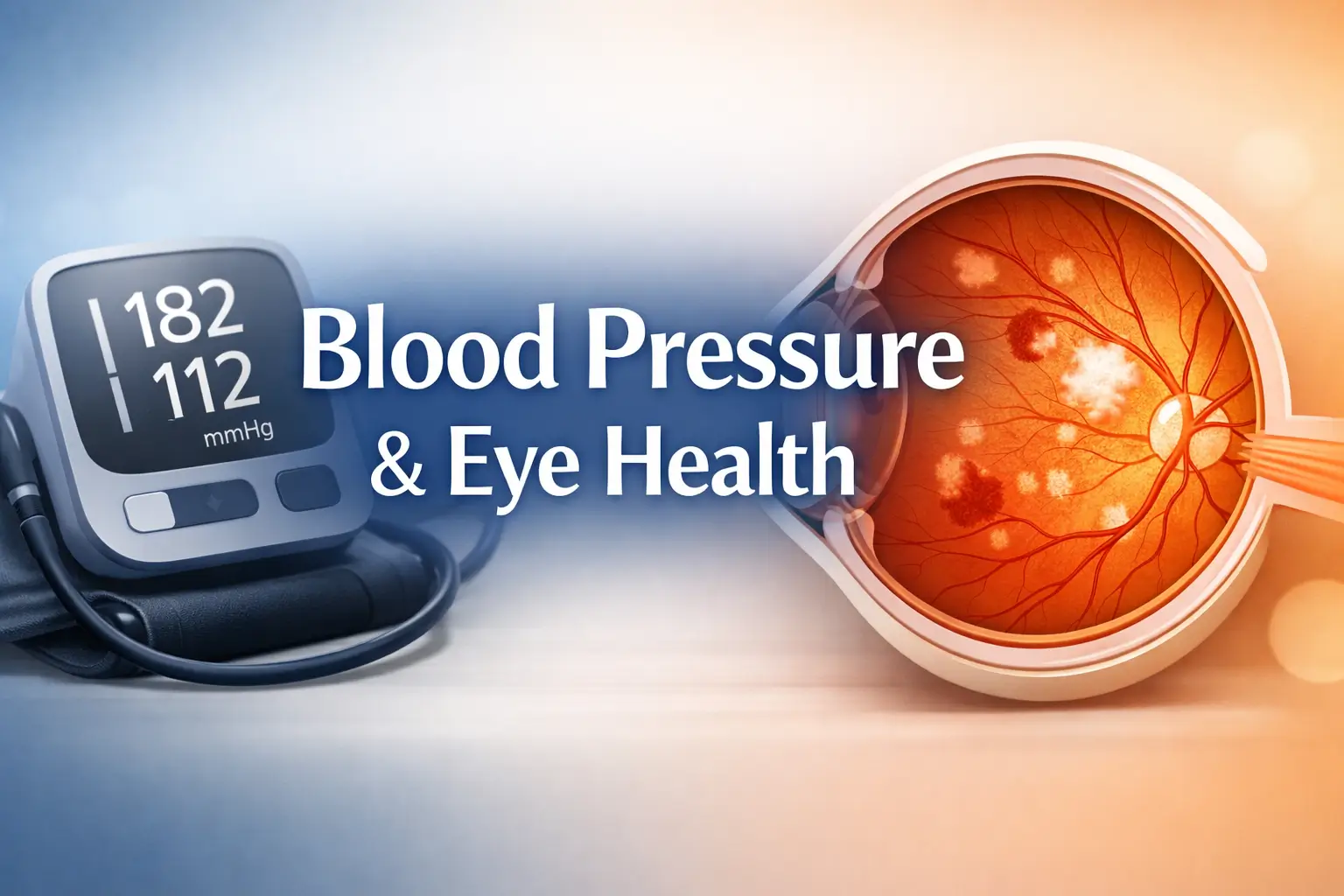
AHA guidance treats blood pressure above 180 systolic and/or 120 diastolic with concerning symptoms, including a vision change, as an emergency: call 911 in the United States. Without symptoms, repeat the reading as directed in the guidance and contact a healthcare professional if it remains severely high.
Ask what the eye examination found
Request the actual terms used in the report rather than guessing from a photograph or a label such as mild. Vessel changes, bleeding, swelling and optic nerve findings have different implications. Only the examining team can interpret them in context.
An eye examination does not replace blood pressure measurement or assessment of other organs. Feeling well also does not establish that blood pressure is controlled.
Coordinate the eye and blood pressure plans
Ask whether the eye finding needs urgent medical assessment, what follow-up is recommended and whether a report will go to the clinician managing blood pressure. Obtain an explicit timeframe and an after-hours contact.
Do not take extra medicine, skip doses or change the dosing time to respond to an eye finding without direct clinical instructions. Bring concerns about dizziness, falls or adverse effects to the prescribing team.
Prepare for the conversation
Bring the eye report, a current medicine list and a home blood pressure log if one has been requested. Note how measurements were taken and any symptoms occurring at the same time.
Useful questions include: What was seen? Does it change the blood pressure plan? Is retinal imaging needed? What would require earlier review? The purpose of the log is to communicate with clinicians, not to certify that waiting is safe.
Sources and next step
Bring your questions to your care team. Prepare an appointment question list or report a correction.
Editorial revision: October 22, 2026. Removed unsupported personal experiences and a binary urgent-versus-this-week decision rule. Prepared by a non-clinician; source checking does not replace individual medical or insurance advice. Editorial policy.

PUT THIS GUIDE TO WORK · INTERACTIVE WORKSHEET
Prepare a blood-pressure-and-eye-care coordination card
Use this worksheet alongside the article: Hypertensive Retinopathy: Findings and Next Steps. Use the fields provided to organize your notes and next actions, then save your worksheet.
Your entries stay in this page and are cleared when you reload. No account is needed. Saved files are downloaded only to your device.
This card organizes a discussion or task. It does not provide diagnosis, treatment, medication timing, driving clearance, or professional approval. Copy clinical instructions exactly and ask the professional about uncertainty.
How to use your result
Save the worksheet before leaving this page. Recheck any quote, date, or instruction with the relevant provider, pharmacist, manufacturer, or official organization. A completed checklist means you recorded the steps, not that an outcome is guaranteed.
Worksheet added October 20, 2026. Read the article above for context and its stated review scope.