

Organize your questions and next steps, then save your worksheet.
Summary and next steps
Evidence does not establish blue-light glasses as a reliable insomnia treatment. Prioritize a comfortable evening routine and seek care for persistent sleep problems.
- Check brightness and content without making the walking route dark.
- Record sleep difficulties and daytime effects.
- Ask a clinician about persistent insomnia before buying a promised cure.
Editorial maintenance: October 24, 2026. Summary layout, related links and technical metadata updated. This is not a full clinical review.
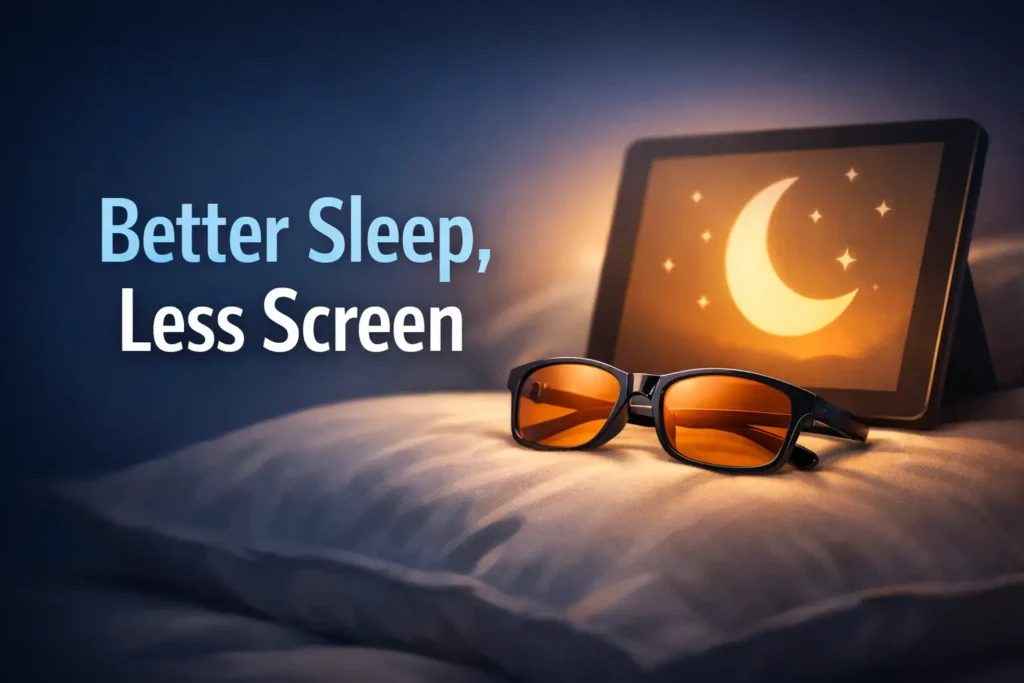
Blue-light filtering glasses are not an established cure for insomnia. A comfortable evening reading setup may be useful, but a lens marketing claim should not determine how you manage persistent sleep difficulties.
What the review can tell you
A 2023 Cochrane review examined 17 randomized trials. The sleep findings were inconsistent and the evidence was very uncertain. It did not establish a dependable sleep benefit from blue-light filtering lenses. The studies also differed in participants, lens designs and duration.
That evidence does not justify promising faster sleep to seniors who wear a particular tint for 60–120 minutes. A personal impression after one night also cannot establish that a lens treated insomnia.
Start with a usable evening setup
Choose print size and screen brightness that let you read comfortably without struggling with controls. Try a calmer activity or content if your current evening routine leaves you alert. Accessibility display settings are optional preferences, not an insomnia prescription.
Keep the route to the bathroom adequately lit. Do not dim the whole home to satisfy a sleep experiment. If a tint makes edges or obstacles harder to see, remove it before moving around and reconsider its usefulness.
Make a short record, not a product trial verdict
If helpful, note bedtime, time spent awake, awakenings and daytime sleepiness. Include relevant changes such as pain, caffeine, medicines or a different sleep schedule. Keep notes simple enough to discuss with a clinician.
A diary can organize concerns; it does not prove which factor caused them. Do not postpone care while trying to complete a seven-night lens comparison, and do not stop prescribed medicines or CPAP because a new accessory seems promising.
Questions before spending money
- What benefit is being claimed, and what clinical evidence supports this exact claim?
- Can I try the lenses and return them if they are uncomfortable?
- Does the tint interfere with seeing steps or reading controls?
- Would an ordinary display adjustment meet my comfort goal?
Ask for help with persistent insomnia, marked daytime sleepiness, falls or other troubling symptoms. Discuss assessment and treatment options with an appropriate healthcare professional rather than relying on glasses alone.
Sources and scope
Editorial revision: October 22, 2026. General information for adults and families, prepared by a non-clinician editor. This is not an individual medical, driving or insurance determination.
PUT THIS GUIDE TO WORK · INTERACTIVE WORKSHEET
Prepare a tablet-and-sleep discussion note
Use this worksheet alongside the article: Blue-Light Glasses and Insomnia: Evidence Limits and Practical Questions. Use the fields provided to organize your notes and next actions, then save your worksheet.
Your entries stay in this page and are cleared when you reload. No account is needed. Saved files are downloaded only to your device.
This card organizes a discussion or task. It does not provide diagnosis, treatment, medication timing, driving clearance, or professional approval. Copy clinical instructions exactly and ask the professional about uncertainty.
How to use your result
Save the worksheet before leaving this page. Recheck any quote, date, or instruction with the relevant provider, pharmacist, manufacturer, or official organization. A completed checklist means you recorded the steps, not that an outcome is guaranteed.
Worksheet added October 20, 2026. Read the article above for context and its stated review scope.