
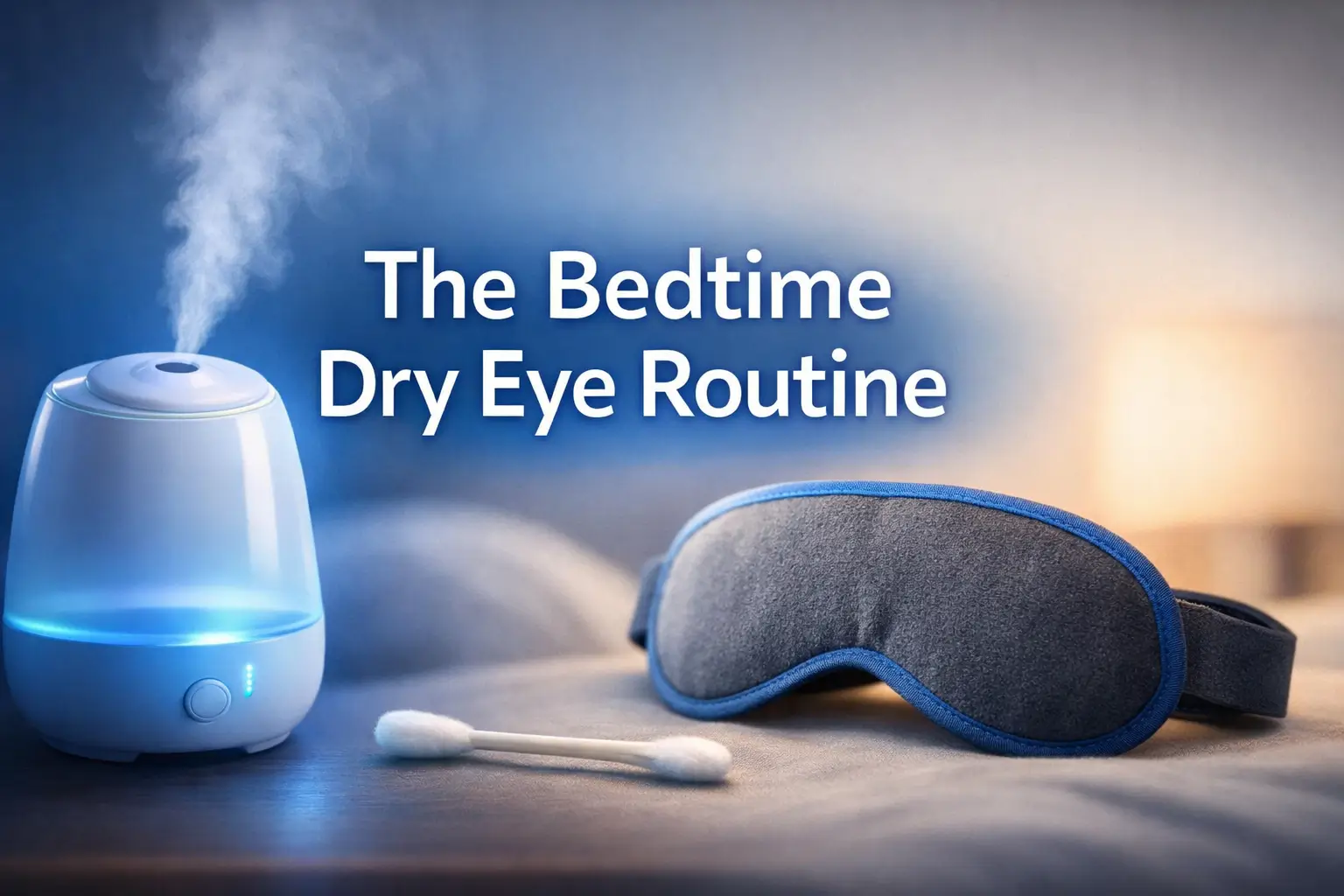
Organize your questions and next steps, then save your worksheet.
Summary and next steps
Describe nighttime dryness to the eye team instead of following a fixed bedtime formula. More heat, cleanser or humidity is not automatically better.
- Record symptoms, relevant medicines and any CPAP use.
- Review the existing care plan before adding a product.
- Seek appropriate advice for pain or changing vision.
Editorial maintenance: October 24, 2026. Summary layout, related links and technical metadata updated. This is not a full clinical review.
Nighttime dry-eye care should match the cause of your symptoms, not a fixed 15-minute formula. A less drying room and an appropriate eyelid-care plan may help comfort. Persistent symptoms, pain or changing vision need assessment; adding more heat, cleanser or humidity is not always the answer.
Editorial source check: October 15, 2026. General information for adults and caregivers. This is not a diagnosis, a tested recovery programme or a substitute for an individual treatment plan.
Do not wait through a bedtime trial for warning signs
Seek urgent eye care for a painful red eye, particularly if you wear contact lenses. Sudden sight loss, severe pain or pain with light needs emergency assessment. Use your local urgent or emergency service, following the NHS dry-eye warning signs. Do not drive yourself if vision is impaired. The previous suggestion to wait 24–48 hours with contact-lens pain was inappropriate and has been removed.
Start with the problem you need to solve
Tell an eye professional whether you wake with grittiness, crusting, pain or difficulty seeing. Mention recent surgery, contact lenses, medicines and any CPAP use. The timing of symptoms does not establish dry-eye disease, blepharitis or incomplete eyelid closure.
You do not need to buy a humidifier or begin every step below. If a clinician has given you a plan, keep that plan and ask how new symptoms should be handled.
Dryness can have more than one contributor
NHS guidance lists prolonged screen use, dry environments, some medicines and eyelid conditions among contributors to dry eyes. Symptoms alone cannot identify which applies to you. Do not stop prescribed medicines because you suspect dryness.
If airflow seems to come from a CPAP mask, the CPAP eye-leak guide explains the difference between safe equipment checks and changes that need your sleep team. Eye care and mask fitting may both be needed.

Measure humidity before adding moisture
The U.S. Environmental Protection Agency generally recommends indoor relative humidity of 30–50% for homes. This is building air-quality guidance, not a clinically established dry-eye treatment target. A hygrometer gives a room reading; it cannot assess eye health.
If the room is already damp, more humidification is not the next step. Look for condensation on windows and damp furnishings as well as the meter reading. Avoid aiming mist at the face, bedding or electrical equipment; follow the appliance’s placement instructions.
Keep the humidifier clean and avoid over-humidifying
EPA’s home humidifier care guidance recommends these precautions for portable units:
- Unplug before maintenance. Empty, dry and refill the tank daily.
- Clean the unit every third day, following its instructions for cleaners and rinsing. Do not improvise chemical mixtures.
- Use low-mineral water as directed for the unit, particularly with ultrasonic or impeller types.
- Do not raise indoor humidity above 50%. Reduce use if condensation or dampness develops.
- Keep steam and boiling-water units out of children’s reach because of burns.
A room humidifier is different from a CPAP humidifier; these room-appliance instructions are not a CPAP settings guide. If upkeep is unrealistic, discuss a simpler comfort plan rather than leaving standing water in an unused tank.
Use warmth for an appropriate eyelid-care plan
The NHS blepharitis guide describes a clean warm compress on closed lids for 5–10 minutes as part of eyelid care. That advice concerns blepharitis; it does not prove that every person with nighttime dryness needs heat or a particular bedtime sequence.
Use comfortable warmth, not heat that stings or burns. For a reusable warming mask, follow its exact heating instructions rather than copying microwave times from another product. Do not fall asleep wearing a heated device. Ask for a demonstration if you are unsure about safe temperature, pressure or duration, especially after surgery or if sensation is reduced.
Stop an uncomfortable treatment and seek advice. More heat, a tighter mask or longer use is not evidence of better treatment.
Clean gently with a method suited to your eyes
For blepharitis, NHS guidance describes gentle eyelid cleaning and avoiding contact lenses and eye makeup while symptomatic. Ask a pharmacist or eye professional which cleanser and technique suit you. There is no universal “best” wipe, foam or home dilution for every reader.
- Wash and dry your hands before handling eye products.
- Use the method recommended for your condition; keep cleanser out of the eye.
- Do not scrub tender lid edges or keep using a product that causes worsening burning, redness or swelling.
- Do not wait two or three nights to see whether significant irritation settles. Stop the irritating product and ask for advice.
The previous “try one method for seven nights” rule has been removed. A clinician may recommend ongoing lid care, but an online trial should not override symptoms or an individual plan.
Keep contact lenses away from water
The CDC advises removing contact lenses before showering or swimming and not rinsing or storing them in water. If water touches lenses, remove them promptly. Discard them, or clean and disinfect reusable lenses overnight according to their care system before reuse. Do not reuse daily disposable lenses.
Chemical exposure is a different emergency. If a strong chemical gets into the eye, begin flushing immediately with plenty of clean, non-hot running water for at least 20 minutes and seek emergency help. Do not delay flushing while searching for sterile fluid. The NHS eye-injury guidance explains this first aid. Routine lens water precautions must not be interpreted as a reason to delay emergency irrigation.
Keep drops and other medicines on their own instructions
Ask which product, frequency and order are appropriate if you use several eye medicines. Do not add a gel, ointment or new drop merely to complete this page’s checklist. Keep prescription treatment on its prescribed schedule. Our preservative-free eye-drop guide explains packaging and handling questions to discuss.
Make the evening easier on your eyes
Move direct fan airflow away from your face and choose a reading setup you can use comfortably. Take breaks instead of pushing through symptoms. The screen-comfort guide for older adults covers text size and glare. This page does not claim that using a phone before bed “cancels” a compress or guarantees next-morning symptoms.
Avoid turning comfort care into a test of endurance
- Do not continue a hot compress or irritating cleanser to finish a routine.
- Do not increase room humidity because a symptom score did not fall.
- Do not infer that temporary relief identifies the medical cause.
- Do not use a fixed seven-night trial to postpone advice.
Bring recurring nighttime symptoms to an examination
Arrange advice if symptoms persist, recur, worsen or interfere with reading, sleep or daily activities. Tell the practice about pain, contact lenses, visual changes or recent surgery when booking so they can advise on urgency. Warning signs at the top require faster care.
Keep a brief private note: symptom description, one eye or both, onset, any visual change, medicines and products used, whether a product irritated the eyes, and room or CPAP observations. You do not have to gather a week’s data before calling.
Common questions
Is 15 minutes a proven treatment duration?
No. The page no longer presents a fixed combined routine as a tested treatment. Specific eyelid-care instructions depend on the condition and product.
Should I raise humidity until my eyes feel better?
No. Follow indoor moisture guidance and address dampness. A humidity reading cannot determine the cause of symptoms.
Should a cleanser sting for a few nights before it works?
Do not treat worsening irritation as a necessary adjustment period. Stop the irritating product and ask for advice.
Choose one safe next action
Check the room for direct airflow and dampness, read the instructions for products you already use, or arrange advice about recurring symptoms. If eyelid care has been prescribed, use that plan rather than this page’s former six-minute schedule.
About this update: unverified personal stories, unsupported timed recovery claims and an oversimplified humidity calculator were removed. Source checking is editorial review, not clinician endorsement.
PUT THIS GUIDE TO WORK · INTERACTIVE WORKSHEET
Prepare a nighttime dry-eye care question
Use this worksheet alongside the article: Dry Eyes at Night: Humidifiers, Warm Compresses and Safe Eyelid Care. Use the fields provided to organize your notes and next actions, then save your worksheet.
Your entries stay in this page and are cleared when you reload. No account is needed. Saved files are downloaded only to your device.
This card organizes a discussion or task. It does not provide diagnosis, treatment, medication timing, driving clearance, or professional approval. Copy clinical instructions exactly and ask the professional about uncertainty.
How to use your result
Save the worksheet before leaving this page. Recheck any quote, date, or instruction with the relevant provider, pharmacist, manufacturer, or official organization. A completed checklist means you recorded the steps, not that an outcome is guaranteed.
Worksheet added October 20, 2026. Read the article above for context and its stated review scope.