

Organize your questions and next steps, then save your worksheet.
Summary and next steps
Halos, missed hazards and troubling glare are reasons to pause difficult driving and seek assessment. There is no validated blog score or glare-timing cutoff that clears you to drive.
- Arrange another ride if you cannot see the road reliably.
- Describe symptoms and any near-miss to an eye-care professional.
- Ask about a driving evaluation and state requirements.
Editorial maintenance: October 24, 2026. Summary layout, related links and technical metadata updated. This is not a full clinical review.
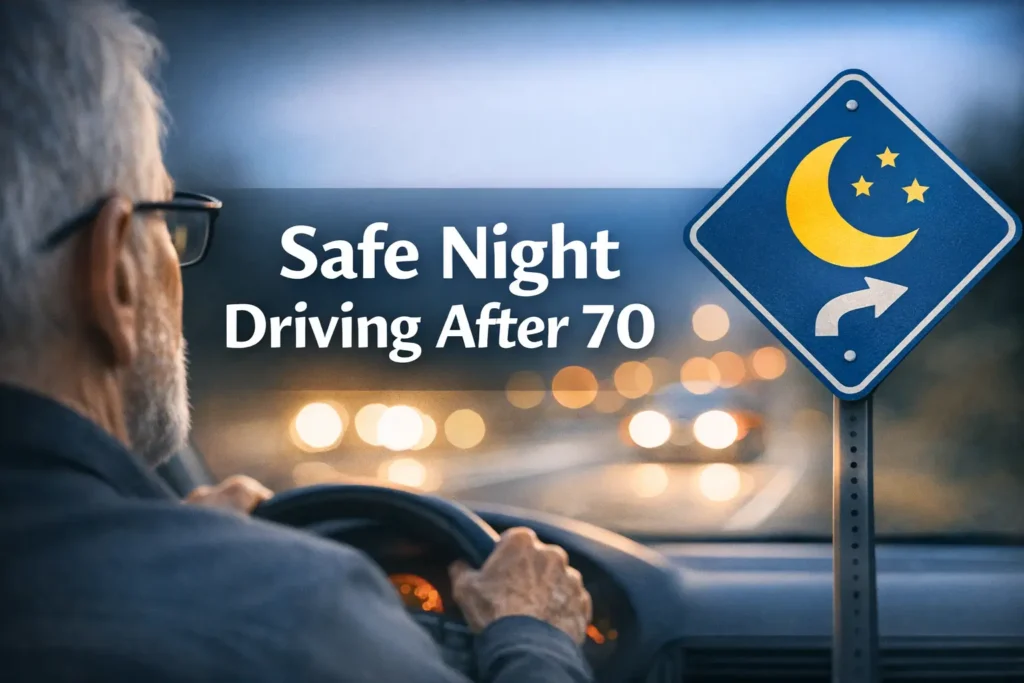
If glare, halos or missed hazards make night driving difficult, arrange another ride and ask for an assessment. Age alone does not establish ability, and a home checklist cannot clear someone to drive.
Act on the difficulty, not a score
Do not wait for a crash or a particular number of difficult nights before discussing a concern. A near-miss, trouble identifying pedestrians or difficulty following signs deserves attention. If you cannot see the route reliably, do not drive it as an experiment.
Remove the previous idea of measuring glare recovery with a bright light or using a percentage change as a driving threshold. Those are not validated licensing or clinical tests. Do not shine a torch toward the eyes or ask someone to demonstrate difficulty on the road.
Arrange the right assessment
Tell the eye-care professional what actually happened: the setting, visibility, affected task and any recent vision change. Ask whether an eye condition, prescription or other factor needs evaluation. Discuss possible medication effects with the prescriber or pharmacist without changing doses yourself.
Ask whether a driver rehabilitation evaluation is appropriate and check your state licensing agency’s current requirements. Passing a routine vision chart is not a complete evaluation of night-driving performance.
Bring observations that help the conversation
Write a short account of a recent problem, including whether it happened at dusk, in rain or around headlights. Describe missed information rather than awarding yourself points. Do not add extra drives to obtain more data.
- What task became difficult?
- Was there a near-miss or a passenger concern?
- Did symptoms begin suddenly or gradually?
- What medicines or eye treatment changed recently?
Sudden sight loss or severe eye pain needs urgent medical assessment, not a driving diary. Do not drive yourself with impaired vision.
Plan transport before the next difficult trip
Choose a real alternative for the next evening appointment, shopping trip or social activity: a trusted driver, available community transport or another suitable service. Check pickup arrangements and costs in advance.
A family conversation can begin with a specific observation and an offer: “The headlights seemed difficult on Tuesday. Let us arrange a ride and an assessment.” Keep the person involved in decisions. Daytime driving or a familiar route should not be presented as automatically safe; follow individual advice and licence conditions.
Sources and scope
Editorial revision: October 22, 2026. General information for adults and families, prepared by a non-clinician editor. This is not an individual medical, driving or insurance determination.
PUT THIS GUIDE TO WORK · INTERACTIVE WORKSHEET
Prepare a night-driving concern and alternatives card
Use this worksheet alongside the article: Night Driving After 70: Warning Signs, Assessment and Transport Alternatives. Use the fields provided to organize your notes and next actions, then save your worksheet.
Your entries stay in this page and are cleared when you reload. No account is needed. Saved files are downloaded only to your device.
This card organizes a discussion or task. It does not provide diagnosis, treatment, medication timing, driving clearance, or professional approval. Copy clinical instructions exactly and ask the professional about uncertainty.
How to use your result
Save the worksheet before leaving this page. Recheck any quote, date, or instruction with the relevant provider, pharmacist, manufacturer, or official organization. A completed checklist means you recorded the steps, not that an outcome is guaranteed.
Worksheet added October 20, 2026. Read the article above for context and its stated review scope.