
Organize your questions and next steps, then save your worksheet.
Summary and next steps
Understand the research behind beta-carotene warnings for current and former smokers, and which questions to discuss before using an AREDS2 supplement.
Editorial maintenance: October 24, 2026. Summary layout, related links and technical metadata updated. This is not a full clinical review.
The key distinction: the beta-carotene warning concerns concentrated supplements and smoking history. It is not evidence that everyone who has smoked should start AREDS2. Whether an eye supplement belongs in your care depends on your eye findings and a review of your medicines and other products.
This article explains the research behind the warning. Use our separate AREDS2 label checklist when preparing a product comparison, or begin with the overall formula-safety guide.
Why the warning changed eye-supplement formulas
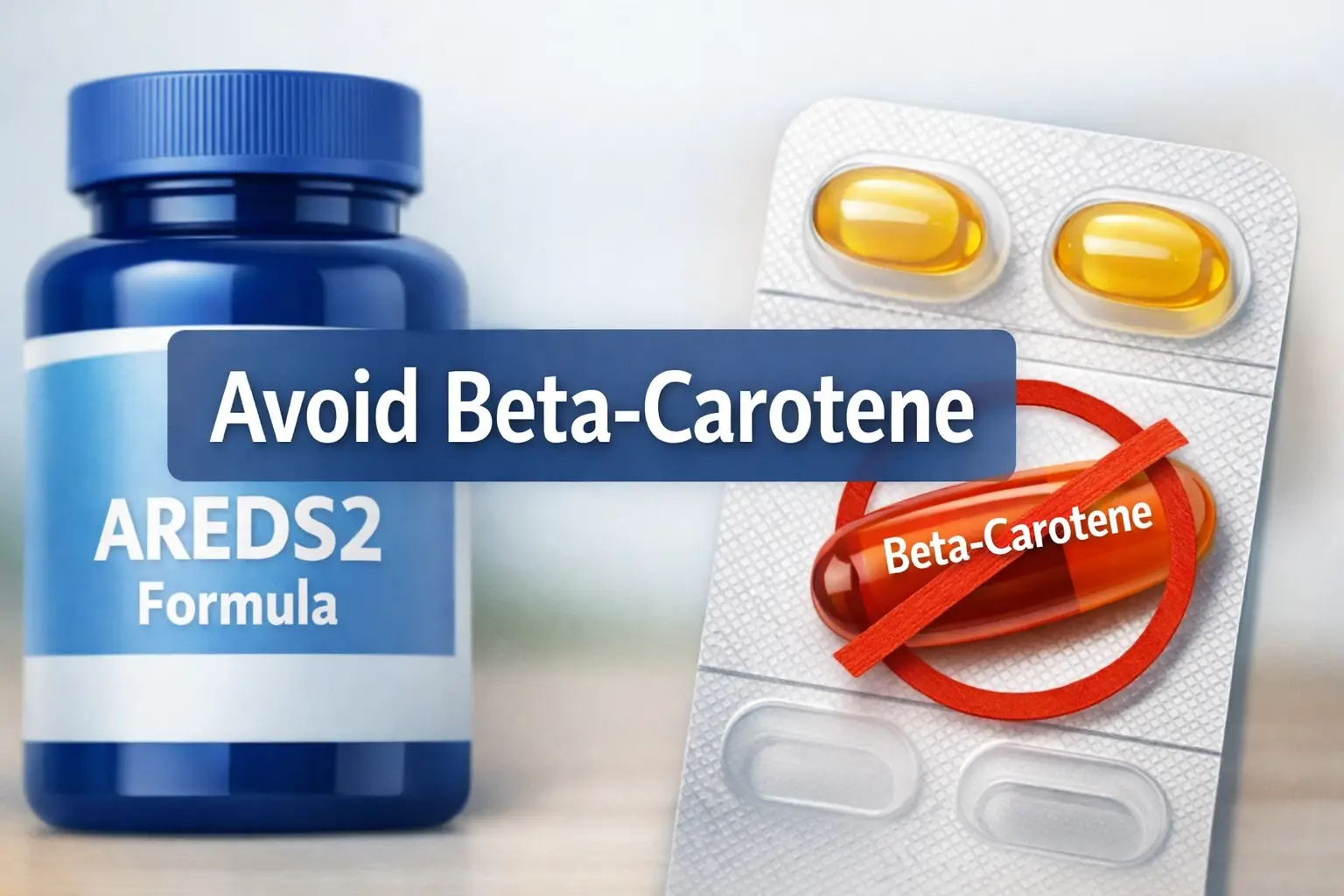
According to the NIH report on long-term AREDS2 findings, earlier studies had linked beta-carotene supplements with increased lung-cancer risk in current smokers. AREDS2 investigated modifications to the original eye-supplement formula, including replacing beta-carotene with lutein and zeaxanthin.
The NCCIH research summary explains an important detail: current smokers were not assigned beta-carotene in AREDS2 because that risk was already known. Long-term follow-up identified increased lung-cancer risk among former smokers who had received beta-carotene. The studies should not be described as if all smoking groups were assigned the same treatments.
What this finding means for a care discussion
NEI advises current and former smokers to avoid the older beta-carotene-containing AREDS formula and use the newer AREDS2 formulation when supplementation is appropriate. See the official summary of trial findings.
Tell your clinician about past smoking even if you quit many years ago. Bring the actual ingredient panels rather than relying on a remembered product name. A study finding about a group does not provide your individual chance of cancer, and changing a supplement does not establish whether you have a disease.
What the evidence does not establish
- Smoking history alone does not establish an indication for an AMD supplement.
- A supplement is not a substitute for an eye examination, prescribed treatment or monitoring.
- The absence of beta-carotene does not establish that every other ingredient or dose is suitable for you.
- A product advertised as supporting vision is not necessarily the formulation studied in AREDS2.
NCCIH cautions that supplements may interact with medicines and that unproven approaches should not replace conventional eye care. Its eye-condition guidance is a useful companion to the trial reports.
Questions to take to your eye-care professional
- What is my diagnosis and AMD stage, and does the evidence apply?
- Does my current bottle contain beta-carotene or duplicate ingredients in another product?
- Which exact formulation and directions do you recommend for my circumstances?
- What should I do about a product I already use or a possible adverse effect?
Keep the answers with your private medication and supplement list. Do not use this article to calculate a personal cancer risk or to choose a dose. If you have a product question before an appointment, ask a pharmacist or your treating team to review the complete label.
Sources and editorial scope
The linked NIH, NEI and NCCIH materials support the research summary above. This page does not rank brands or report personal treatment results. For practical preparation, use the appointment-question checklist.
Editorial source review: October 24, 2026. Rewritten by a non-clinician to distinguish trial evidence from personal recommendations. Removed unverified anecdotes, automatic switch instructions, generic buying claims and the unrelated video embed. This is an editorial review, not clinician review. Editorial policy.
PUT THIS GUIDE TO WORK · INTERACTIVE WORKSHEET
Prepare an eye-supplement label review
Use this worksheet alongside the article: Beta-Carotene, Smoking History and AREDS2: What the Research Shows. Use the fields provided to organize your notes and next actions, then save your worksheet.
Your entries stay in this page and are cleared when you reload. No account is needed. Saved files are downloaded only to your device.
This card organizes a discussion or task. It does not provide diagnosis, treatment, medication timing, driving clearance, or professional approval. Copy clinical instructions exactly and ask the professional about uncertainty.
How to use your result
Save the worksheet before leaving this page. Recheck any quote, date, or instruction with the relevant provider, pharmacist, manufacturer, or official organization. A completed checklist means you recorded the steps, not that an outcome is guaranteed.
Worksheet added October 20, 2026. Read the article above for context and its stated review scope.