


Senior vision safety guide
How Seniors with Presbyopia Can Read Medicare Notices More Safely
Medicare mail has a talent for arriving at the exact wrong moment: after dinner, under dim kitchen light, printed in tiny gray type that seems designed by someone who has never searched for reading glasses. For seniors with presbyopia, that is not just annoying. It can turn dates, dollar amounts, denial language, and appeal instructions into a paper fog.
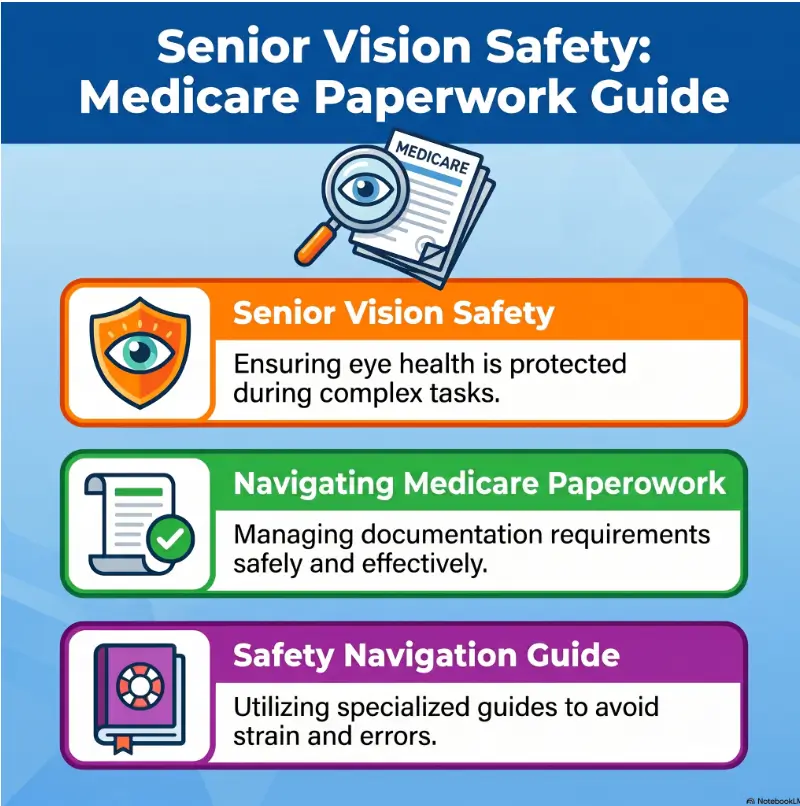
This guide is about slowing down the risky moment before a bill is paid, a denial is ignored, or a suspicious claim is tossed into the drawer. It gives older adults and caregivers a simple reading routine: make the notice bigger, find the clock, match the claim, and ask for help before money or rights slip away.
Think of it as a safer cockpit for Medicare paperwork. One lamp. One folder. One magnifier. One checklist. Fewer paper ghosts, fewer billing surprises, and a much better chance of catching the small line that matters.
Find deadlines first
Spot appeal dates, response dates, and action windows before reading every paragraph.
Separate notice from bill
Know when a document is a summary, an EOB, a denial, or a true payment request.
Catch claim mistakes
Match providers, dates, services, and amounts before paying or filing papers away.
Small print is not harmless when it carries deadlines, dollars, and care decisions. 🧐
Snapshot
This article is for Medicare beneficiaries age 65+, family caregivers, and helpers who want a safer way to read Medicare notices when near vision is unreliable. You will learn how to identify the notice type, enlarge the print, find deadlines, compare bills, flag unfamiliar claims, and decide when to call Medicare, a health plan, a provider, SHIP, or an eye doctor.
Table of Contents
Before You Act: The Paper Can Wait, Some Symptoms Cannot
Presbyopia is the age-related near-vision change that makes close reading harder. It can make Medicare mail feel like a miniature legal puzzle printed on oatmeal-colored paper. But not every new reading problem should be blamed on normal aging.
This article helps with safer reading routines, bill comparison, caregiver support, and decision-making. It does not diagnose eye disease, replace an eye exam, interpret every plan-specific appeal rule, or provide legal advice. Medicare coverage rules can vary by Original Medicare, Medicare Advantage, Part D, provider billing practices, and state-specific support options.
If a notice involves a denial, discharge, large bill, missed deadline, collection threat, or care you still need, confirm the next step with Medicare, your plan, your provider, a SHIP counselor, or a qualified professional before assuming the paper is harmless.
This article helps with reading, not diagnosis
Presbyopia often makes small print, close-up numbers, and low-contrast forms harder to read. That can lead to very practical mistakes: reading 6 as 8, missing “not a bill,” confusing the service date with the notice date, or overlooking appeal instructions near the back.
Still, sudden changes deserve attention. If reading suddenly becomes much harder, one eye seems different, straight lines look distorted, or vision changes quickly, contact an eye doctor promptly. If there is sudden vision loss, flashes, many new floaters, a curtain-like shadow, trauma, or severe eye pain, seek urgent care.
Medicare help is not the same as medical help
For notice questions, use official phone numbers from your Medicare card, plan card, provider portal, or verified government pages. For vision symptoms, call an eye doctor or emergency service. A billing clerk can explain a claim, but they cannot examine a retina. The paper trail and the eye problem belong in different lanes.
Key takeaway
If the issue is small print, build a safer reading setup. If the issue is sudden or rapidly changing vision, treat it as a health concern first. Do not let a Medicare envelope distract from urgent eye symptoms.
Real-world example: the scary amount that was not a bill
A beneficiary opens a Medicare Summary Notice and sees a large number under “maximum you may be billed.” The print is small, the room is dim, and the amount lands like a dropped plate. She almost writes a check before her daughter notices the document says it is not a bill.
They compare the notice with the provider bill. The provider bill has not arrived yet. They check the date of service, the provider name, and the item listed. Everything matches a recent appointment, but no payment is due from the notice alone.
The practical lesson is simple: fear reads faster than eyes. When a notice contains a large number, slow the room down. Identify the document type before paying.
Start With the Deadline, Not the Fine Print
The safest first move is not reading the whole notice from top to bottom. The safest first move is finding the clock.
Medicare notices may contain several dates: the notice date, the service date, the claim processing date, the billing date, the due date, and the appeal deadline. For seniors with presbyopia, those dates can blur into a little parade of numbers. Some matter more than others.
Circle the action date first
Before reading every paragraph, look for phrases like “appeal by,” “must receive,” “respond within,” “payment due,” “coverage decision,” “redetermination,” “reconsideration,” or “request review.” Use a high-contrast pen to circle the action date and write it on the front page in larger print.
If the action date is unclear, do not guess. Call the phone number from an official card or verified website and ask, “What is the final date you must receive my response?” That wording matters because a postmark date and a received date may not feel the same in real life.
Separate notice date from service date
The service date tells you when care, medicine, equipment, or a test was provided. The notice date tells you when the document was generated. A payment due date tells you when a provider expects payment. An appeal deadline tells you when a right may expire.
Use a simple code. Write “SVC” beside the service date, “NOTICE” beside the notice date, “DUE” beside a payment date, and “APPEAL” beside any appeal deadline. It may feel a little fussy, but paperwork rewards boring habits.
The most dangerous line may be small
The largest number on the page may be the amount charged. The most important sentence may be the tiny one telling you how long you have to respond. Presbyopia makes that mismatch risky because the eye naturally chases the bold amount first.
Deadline-first mini checklist
- Find the notice date.
- Find the date of service.
- Find any payment due date.
- Find any appeal or response deadline.
- Write the next action in large print on the first page.
Decode the Notice Type Before You React
Not all Medicare-looking mail asks you to pay. Some notices explain what was billed. Some explain what was paid. Some explain what was denied. Some are plan updates. Some are real bills from providers. Treating all of them the same is how money leaks out of the household budget.
The first question should always be: “What kind of document is this?” Not “How much is it?” Not “Who do I blame?” Document type comes first.
Medicare Summary Notice: not a bill
For people with Original Medicare, the Medicare Summary Notice shows services or supplies billed to Medicare, what Medicare paid, and the maximum amount the beneficiary may owe. Medicare explains that the MSN is not a bill.
That does not mean you should ignore it. An MSN is useful because it can reveal unfamiliar services, duplicate billing, denied items, and amounts you may later see on a provider bill. But it should not be treated as a stand-alone demand for payment.
Review Medicare’s explanation of the Medicare Summary Notice if you want to compare your paper notice with the official description.
Explanation of Benefits: a plan statement, not always a payment demand
Medicare Advantage and Part D plans often send plan statements that may look like bills at first glance. These documents may describe claims, prescriptions, plan payments, denials, deductibles, copays, or coinsurance.
The safest move is to match the statement against the plan card, pharmacy receipts, provider bills, and patient portal records. A plan statement can be useful, but it should not automatically open the checkbook.
Denial letter: treat it like a clock
A denial letter deserves a different level of attention. It may involve a drug, test, device, visit, hospital stay, therapy service, home health service, or other care decision. The exact appeal process can vary by coverage type, so read the written instructions and confirm the deadline.
If a denial affects ongoing care, do not wait for a quiet weekend. Call the plan, Medicare, the provider, or a SHIP counselor and ask what documents may strengthen the appeal.
Notice-type sorting card
| Document type | First question | Safer next move |
|---|---|---|
| Medicare Summary Notice | Is this only a summary? | Compare with provider bill before paying. |
| Plan EOB or statement | What did the plan pay or deny? | Match against plan records and receipts. |
| Provider bill | Is payment truly due now? | Ask for an itemized statement if unclear. |
| Denial or appeal notice | What is the deadline? | Follow written appeal instructions and get help quickly. |
Make the Notice Bigger Before Working Harder
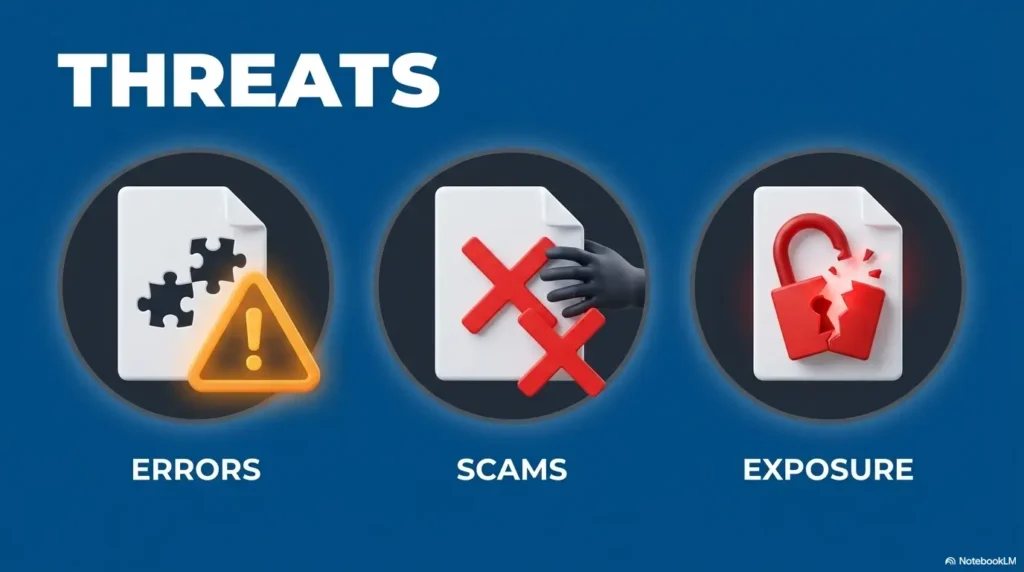
A common mistake is trying to “push through” small print. That turns reading into endurance training, and Medicare paperwork is not a sport anyone asked to join.
Make the notice easier to read before you make decisions from it. Enlargement, lighting, contrast, and a stable reading surface can prevent mistakes that feel tiny until a bill, denial, or missed deadline proves otherwise.
Ask for accessible Medicare communications
Medicare and CMS provide accessible communication options such as large print, braille, audio, data files, relay services, and TTY communications. If a senior cannot safely read standard Medicare mail, requesting an accessible format is not being difficult. It is basic paperwork safety.
Use digital notices when paper is a blur
Digital Medicare account tools can help some beneficiaries view claims more clearly, zoom in, print larger copies, or share information with a trusted helper. Digital is not automatically better for every senior, but it can be safer when paper print is too small or glare-prone.
If the senior struggles with phones or passwords, start with basic setup support. A related guide on how to simplify an older parent’s phone can help reduce the digital clutter before adding Medicare account tasks.
Build a reading station, not a paperwork pile
A safe reading station does not need to look medical. It can be one chair, one bright adjustable lamp, one magnifier, one dark pen, one folder, and one checklist. The magic is not the gear. The magic is putting the same gear in the same place every time.
For broader near-vision routines, see this guide on presbyopia reading tips for seniors. For print size decisions around labels, notes, and household reminders, this article on the best font size for seniors pairs well with Medicare folder setup.
Good, Better, Best setup for safer Medicare reading
| Setup level | What it includes | Best for | Budget note |
|---|---|---|---|
| Good | Bright lamp, current reading glasses, dark pen, labeled folder | Seniors who can read standard print with effort | Low cost and easy to start today |
| Better | Good setup plus handheld magnifier, larger printed checklist, phone camera zoom | Readers who misread dates or dollar amounts | Moderate cost if buying a quality magnifier or lamp |
| Best | Better setup plus digital notices, caregiver second-pass review, accessible formats | High-risk notices, denials, poor contrast sensitivity, or repeated billing confusion | May involve time, tech help, or paid organizer support |
The best way to choose a setup is not to buy the fanciest magnifier first. Start with the mistakes happening now. If dates are the problem, use a larger calendar and high-contrast pen. If glare is the problem, change lighting. If paper organization is the problem, build the folder before buying another gadget.
The 5-Line Scan: What to Read First
Dense notices invite wandering. The eyes move, the brain gets tired, and suddenly the reader is on page three with no idea whether anything requires action. The 5-line scan gives the notice a simple entrance door.
Infographic: The 5-Line Medicare Notice Scan
1
Sender
Who sent it?
2
Service
What care or item?
3
Date
When did it happen?
4
Money
Paid, denied, or owed?
5
Action
Pay, call, save, compare, or appeal?
Line 1: Who sent it?
Look for Medicare, a Medicare Advantage plan, a Part D plan, a provider, a lab, a hospital, a pharmacy, a medical equipment supplier, or a collection agency. If the sender is unfamiliar, pause before calling any number printed in the letter.
Scam-like mail can borrow official-looking language. Use verified contact numbers from cards, known portals, or official websites when money, Medicare numbers, or personal details are involved.
Line 2: What service is listed?
Match the service to a real appointment, test, prescription, device, therapy visit, hospital stay, ambulance ride, or home health service. A service name may be technical, so do not expect it to sound exactly like the conversation in the exam room.
If the service is unfamiliar, mark it with a question mark. Do not pay it, discard it, or panic over it yet. A question mark is a temporary holding shelf for confusion.
Line 3: What date of service?
The date of service is one of the best fraud and error filters. Compare it with a calendar, appointment reminder, hospital discharge paper, prescription receipt, or caregiver note.
If the date is impossible, such as a visit listed while the beneficiary was out of town or hospitalized elsewhere, circle it and ask for a claim review.
Line 4 and Line 5: What happened, and what happens next?
Separate “provider charged,” “Medicare approved,” “plan paid,” “Medicare paid,” “denied,” and “you may owe.” Those phrases do different jobs. One number may describe a charge, while another describes the allowed amount or possible patient responsibility.
Then reduce the notice to one action: save, compare, call, appeal, ask for an itemized bill, or pay only after confirming it is a real bill. If the action is not clear, the action is “ask.”
Do Not Pay From One Notice Alone
When a notice shows a large amount, the emotional brain hears a cash register. But safer Medicare reading means slowing down the pay reflex until the document type and amount are confirmed.
This is especially important for seniors with presbyopia because small labels around dollar amounts can change the meaning. “Charged,” “approved,” “paid,” and “may owe” are not interchangeable.
Mistake: treating every official-looking letter as a bill
A Medicare Summary Notice, plan statement, or EOB-style document may include scary numbers without asking for payment. A provider bill, on the other hand, may request payment after insurance processing.
Before paying, ask: “Does this document actually say payment is due?” If not, place it in the “compare” folder rather than the “pay” pile.
Mistake: paying before matching the provider bill
A safer routine is to compare four things: the Medicare notice, the provider bill, bank or credit card records, and patient portal claims. If one does not match, pause. Ask the provider for an itemized statement and claim review.
This does not mean delaying every legitimate bill forever. It means creating a small buffer between confusion and payment. That buffer can prevent duplicate payments, wrong payments, and payments that should have waited for plan processing.
DIY vs paid help: when money support may be worth considering
Some households can manage Medicare mail with a folder and a weekly review. Others may need a family helper, benefits counselor, bookkeeper, patient advocate, legal aid office, or professional bill review support. Paid help is not automatically necessary, but it may be worth comparing when the dollar amounts, stress, or risk are high.
| Option | What it can help with | Watch out for | Best fit |
|---|---|---|---|
| Free DIY checklist | Sorting notices, matching bills, tracking deadlines | Requires consistency and readable setup | Simple claims and organized households |
| Trusted caregiver review | Second-pass accuracy, phone calls, portal comparison | Privacy and control must be respected | Older adults who want help but not takeover |
| SHIP counselor | Neutral Medicare coverage and notice guidance | Availability may vary by location and timing | Plan questions, appeal confusion, enrollment issues |
| Paid bill organizer or advocate | Complex bills, repeated errors, high-stress paperwork | Compare fees, scope, privacy practices, and credentials | Large balances, repeated denials, or caregiver burnout |
Key takeaway
The safer rule is not “never pay.” It is “do not pay from one confusing notice.” Match the document to a real bill and a real service first.
Claim Matching: The Quiet Fraud Filter
Claim matching is the least glamorous part of Medicare paperwork, which is exactly why it works. Fraud clues and billing mistakes often hide in plain sight: an unfamiliar provider, a duplicate service, a medical equipment charge, or a prescription the person never picked up.
For seniors with presbyopia, the matching process needs to be large, slow, and repeatable. The goal is not to become a claims expert. The goal is to notice when something does not belong.
Match names, dates, and providers
Start with the easiest pieces. Does the beneficiary’s name look correct? Does the provider name match a doctor, clinic, lab, hospital, pharmacy, or supplier the person recognizes? Does the date line up with the calendar?
For seniors who already use a household paper system, a low-vision filing setup can reduce friction. This guide on a low-vision filing system is useful for turning loose papers into a repeatable review path.
Flag services you never received
Mark any unfamiliar service, strange equipment, duplicate claim, provider you do not recognize, or prescription that was never picked up. Do not accuse first. Verify first. Medical billing language can be odd, but genuine confusion should still be checked.
Keep a “question page” in the folder. Write the notice date, service date, provider name, amount, and question. That creates a calm script for phone calls instead of a panicked shuffle through paper.
Save the envelope, not just the notice
The envelope can help show when something arrived, especially if a notice came late or a deadline dispute appears. Staple or clip the envelope behind the notice. This is not dramatic, but paperwork history often lives in boring evidence.
Claim-matching checklist
- Does the provider name look familiar?
- Does the date match a calendar appointment, pharmacy pickup, test, or hospital stay?
- Is the service listed once, or does it appear twice?
- Is there any equipment or prescription you do not recognize?
- Does the amount match the provider bill or portal balance?
- Is there a denial or appeal instruction hiding near the end?
Show me the nerdy details
Medicare notices often separate several money concepts: the provider charge, the approved amount, what Medicare or the plan paid, and what the beneficiary may owe. A billing dispute can start when one party reads the wrong column as the final amount.
Appeals also differ by coverage type. Original Medicare, Medicare Advantage, Part D, hospital discharge appeals, skilled nursing facility notices, and other coverage decisions may have different steps and timelines. The written notice should explain what to do, but the safest move is to confirm the deadline and required documents before assuming you understand the clock.
For reading safety, treat every important notice as a data-matching task: document type, sender, service date, claim item, amount, deadline, and action. The more emotional the notice feels, the more useful this dull little checklist becomes.
Caregiver Review Without Taking Over
Helping someone with Medicare mail is tender territory. The helper sees risk. The senior may feel watched, corrected, or quietly demoted. A good review routine protects both accuracy and dignity.
The best caregiver system is not “give me all your mail.” It is “let’s make the important mail easier to read, easier to store, and easier to verify.” That small difference changes the emotional weather in the room.
Use the “read aloud, then decide” method
The senior reads the sender, service date, amount, and action line aloud if they can. The caregiver follows with a second-pass review. This keeps the senior in the driver’s seat while still catching small-print errors.
If reading aloud is tiring, reverse the method. The helper reads the notice aloud while the senior confirms whether the service, provider, and date sound familiar. Either way, decision-making should not vanish into the helper’s hands unless the senior has clearly asked for that level of support.
Protect privacy while reducing risk
Medicare mail may include personal health details, Medicare numbers, provider names, prescription information, and financial amounts. Set a clear household rule for who may open mail, where notices are stored, and when sensitive numbers should be covered or put away.
For seniors who also struggle with text codes, portals, or login screens, a guide on senior verification codes can help caregivers reduce digital confusion without grabbing every password.
Avoid the kitchen-table pile
The kitchen table is where paperwork goes to become weather. A single labeled folder works better: “Medicare Notices: Review Before Paying.” Add three inside sections: “New,” “Questions,” and “Done.”
If the senior also manages medication papers, pharmacy leaflets, or small bottle labels, this article on medication labels that are too small for seniors can support a broader home-reading safety system.
Short Story: the folder that lowered the temperature
Martin used to hand his Medicare mail to his daughter only after he was already upset. The envelopes stacked near the toaster, mixed with coupons, grocery receipts, and one heroic rubber band that had given up months earlier.
One Saturday, they made a folder together. Not a lecture folder. Not a “Dad can’t handle this” folder. Just three tabs: New, Questions, Done.
The next notice had a denied item. Martin read the sender aloud, his daughter checked the deadline, and they called the plan with the paper flat under a bright lamp.
The denial still needed attention, but the panic left the room. The folder did not solve Medicare. It gave them a calmer way to meet it.
Common Mistakes That Make Medicare Notices Riskier
Most Medicare reading mistakes are not caused by carelessness. They happen because the environment is working against the reader: weak light, old readers, glossy paper, small print, similar numbers, and too much stress.
The fix is usually not heroic. It is practical. Change the setup, slow the order, and reduce the number of decisions made while tired.
| Common mistake | Why it is risky | Safer alternative |
|---|---|---|
| Reading at night with weak light | Small dates and amounts become easier to misread | Review notices in morning or afternoon task lighting |
| Using old or wrong reading glasses | Numbers, claim codes, and fine print blur | Use current readers and consider an eye exam if reading worsens |
| Ignoring “not a bill” | May lead to unnecessary or early payment | Confirm the document type before paying |
| Missing appeal language | Rights may expire before help is requested | Scan the last pages for appeal and response instructions |
| Throwing away confusing mail | Important deadlines and claim clues disappear | Put confusing mail in the “Questions” section |
Reading glasses are tools, not trophies
Many seniors keep several pairs of readers around the house. That is practical until the wrong strength sits beside the Medicare folder. If a pair makes print bigger but not clearer, it may encourage false confidence.
For a deeper comparison, see reading glasses vs magnifiers. The right tool depends on whether the problem is focus, print size, glare, tremor, contrast, or fatigue.
Glossy paper and glare can distort the whole page
Some notices and inserts reflect light in a way that makes gray print shimmer. Move the lamp to the side, tilt the paper slightly, and use a matte folder or clipboard under the notice. If glare is frequent, avoid reading directly under harsh overhead light.
Confusing does not mean unimportant
A confusing notice should not go into the trash. It should go into the “Questions” section. Confusion is not a verdict. It is a label that says, “This needs a second pass.”
Key takeaway
The most dangerous Medicare notice is not always the one with the biggest amount. It is the one that feels confusing enough to ignore.
When to Seek Help: Vision, Billing, or Coverage
One reason Medicare mail feels stressful is that different problems arrive in the same envelope pile. A vision problem, billing mismatch, coverage denial, fraud concern, and caregiver privacy question are not solved by the same person.
Use the right helper for the right problem. That one habit saves time and prevents the circular phone calls that turn a Tuesday into soup.
Call an eye doctor for changing reading ability
If near vision has slowly become harder, an eye exam can confirm whether updated readers, prescription glasses, cataract evaluation, dry eye treatment, or another plan is needed. If reading suddenly changes, one eye seems worse, or vision symptoms are dramatic, seek care more quickly.
For seniors comparing ordinary near-vision changes with broader symptoms, this guide on near vision problems in seniors may help organize what to mention at an appointment.
Call Medicare or the plan for notice meaning
Use Medicare or plan contact information from official cards, secure accounts, or verified websites. Ask direct questions: “Is this a bill?” “What is the deadline?” “What was denied?” “What document do you need from my doctor?”
For appeal basics, Medicare explains that a plan must tell you in writing how to appeal. Always follow the instructions in your specific notice and confirm plan-specific steps if care is at stake.
Call the provider for billing mismatch
If a provider bill does not match the Medicare notice, ask for an itemized statement. Ask whether insurance has finished processing the claim. Ask whether the balance has been adjusted. Ask whether the claim was resubmitted.
Keep notes during the call: date, time, person spoken to, phone number, claim number, promised action, and follow-up date. A doctor appointment note-taking system can also work for billing calls; this doctor appointment note-taking guide gives a simple structure that can be adapted for Medicare calls.
Call SHIP for neutral Medicare counseling
State Health Insurance Assistance Program counselors can help Medicare beneficiaries understand coverage, notices, plan issues, and options without sales pressure. This is especially useful when the question is bigger than one bill but smaller than hiring legal help.
Who to call first
- Sudden vision symptoms: eye doctor, urgent eye clinic, or emergency service.
- Unknown claim: Medicare, plan, provider, or pharmacy using verified contact information.
- Denial or appeal language: plan, Medicare, provider, or SHIP.
- Provider bill mismatch: provider billing office and request for itemized review.
- Caregiver privacy concerns: the senior first, then plan-approved representative rules if needed.

FAQ
Is a Medicare Summary Notice a bill?
No. A Medicare Summary Notice is not a bill. It summarizes services or supplies billed to Medicare, what Medicare paid, and the maximum amount the beneficiary may owe. You should still review it carefully because it can reveal errors, unfamiliar claims, denied items, and future billing questions.
What should seniors read first on a Medicare notice?
Read the notice type, sender, date of service, deadline, denied items, amount owed or possibly owed, and action instructions first. If the notice has appeal language, find the response deadline before reading the rest in detail.
Can Medicare notices be sent in large print?
Medicare and CMS provide accessible communication options, including large print and other formats. Seniors who cannot safely read standard mail should ask for an accessible format and keep a note of the request.
Should I pay the amount shown on my Medicare Summary Notice?
Not from the MSN alone. Compare the notice with the provider’s actual bill, patient portal, and your own records. If the amount or service does not match, call the provider billing office or Medicare using verified contact information.
What if I cannot read my Medicare mail safely anymore?
Ask for accessible formats, improve lighting, use a magnifier or phone camera zoom, set up electronic notices if comfortable, and involve a trusted helper for a second-pass review. If reading difficulty is new or worsening, schedule an eye exam.
What if a claim looks unfamiliar?
Compare it with your calendar, pharmacy records, provider list, appointment reminders, and hospital papers. If it still looks wrong, call Medicare, your plan, the provider, or the supplier. Do not use suspicious phone numbers from unfamiliar mail.
Can presbyopia cause Medicare reading mistakes?
Yes. Presbyopia can make close-up reading harder, especially with small print, poor lighting, low contrast, and dense forms. That can increase the chance of missing dates, denial notes, dollar amounts, and appeal instructions.
When should vision trouble be treated as urgent?
Sudden vision loss, flashes of light, many new floaters, a curtain-like shadow, eye injury, severe eye pain, or rapidly worsening vision should be treated urgently. Do not wait for a paperwork review if the eye symptoms are sudden or severe.
The 10-Minute Notice Review Ritual
The safer system is not complicated. It is a weekly ritual that makes the important parts of Medicare mail visible before stress takes over.
Set up one folder labeled “Medicare Notices: Review Before Paying.” Keep it near a bright lamp with a magnifier, dark pen, and one-page checklist. Inside the folder, use three sections: New, Questions, Done.
Your 15-minute next step
Today, choose one Medicare notice and run the 5-line scan. Write the sender, service date, document type, amount, and next action on a sticky note or large-print page. If the action is unclear, move it to “Questions” and write the safest phone number to call.
That is enough. Not everything needs to be solved in one sitting. Medicare mail becomes safer when it stops being a mysterious pile and becomes a small set of repeatable decisions.
Final practical promise
The goal is not perfect paperwork. The goal is fewer rushed payments, fewer missed deadlines, fewer suspicious claims ignored, and one calmer place where Medicare mail can land before it becomes trouble.
Last reviewed: 2026-07