

Organize your questions and next steps, then save your worksheet.
Summary and next steps
Medicare glaucoma screening coverage applies to certain high-risk patients. See who qualifies, what Part B pays, and what to check before booking.
Editorial maintenance: October 24, 2026. Summary layout, related links and technical metadata updated. This is not a full clinical review.

Yes. Medicare Part B covers a glaucoma screening once every 12 months if you are considered at high risk for glaucoma. You qualify if you have diabetes, have a family history of glaucoma, are Black or African American and age 50 or older, or are Hispanic or Latino and age 65 or older.
The part that surprises many people is the cost. A Medicare-covered glaucoma screening is a preventive service, but it is not automatically a $0 preventive service. Under Original Medicare, the Part B deductible applies, followed by 20% coinsurance based on the Medicare-approved amount. The 2026 Part B deductible is $283.
Before booking, confirm two things with the eye doctor’s office: that you meet one of Medicare’s high-risk criteria and the next eligible screening date based on your last Medicare-covered screening. That simple check can prevent a routine eye exam or an early repeat screening from becoming an unexpected out-of-pocket charge.
Table of Contents
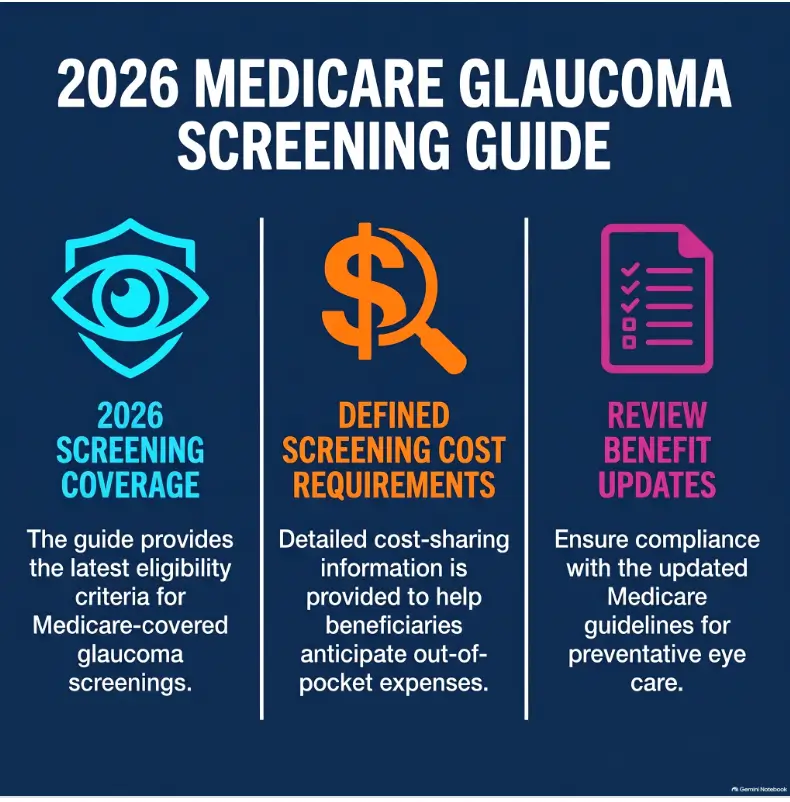
Who Qualifies for Medicare-Covered Glaucoma Screening?
Medicare Part B covers the screening when you have a recognized high risk of developing glaucoma. Medicare currently lists four ways to qualify.
| High-risk category | Age requirement | What to verify |
|---|---|---|
| Diabetes | No separate age threshold for this criterion | Make sure the eye doctor’s records reflect your diabetes |
| Family history of glaucoma | No separate age threshold for this criterion | Tell the office that glaucoma occurs in your family |
| Black or African American | Age 50 or older | Confirm the screening is being billed under the Medicare glaucoma benefit |
| Hispanic or Latino | Age 65 or older | Confirm the screening is being billed under the Medicare glaucoma benefit |
You can verify the current eligibility categories directly through Medicare’s glaucoma screening coverage rules.
The screening must be performed or supervised by an eye doctor who is legally allowed to provide glaucoma testing in your state. The medical record also needs to support your high-risk status, so do not assume the billing office already knows about a family history or another qualifying factor.
What the Medicare-Covered Glaucoma Screening Actually Includes
A covered glaucoma screening is more specific than simply checking whether you can read letters on an eye chart. CMS describes the screening as including a dilated eye examination with measurement of intraocular pressure, along with examination of the optic nerve using direct ophthalmoscopy or slit-lamp biomicroscopy.
- A dilated examination of the eye
- Measurement of pressure inside the eye
- Examination of the optic nerve and other relevant eye structures
Those components matter because glaucoma can damage the optic nerve before a person notices an obvious change in vision. Whether you actually have glaucoma, however, is a clinical determination for your eye-care professional. Medicare’s role is to determine whether the service meets its coverage and payment rules.
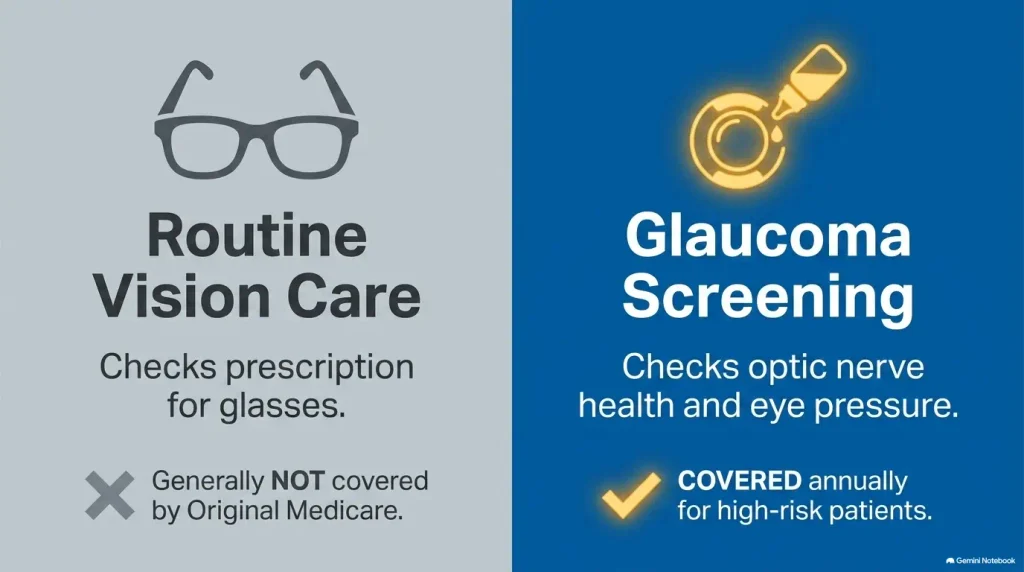
A pressure check alone is not the full screening described by CMS. The CMS-hosted screening description includes dilation, eye-pressure measurement, and examination with direct ophthalmoscopy or slit-lamp biomicroscopy. If the appointment is described only as a quick pressure check, ask the office which screening components will be performed and what service it expects to bill.
If the clinician recommends an OCT scan as well, ask why it is needed and how it will be billed. Do not assume every imaging test is included in the preventive screening charge or automatically covered because you qualify for screening. The separate guide to Medicare coverage for OCT eye tests explains the diagnostic purpose, estimate, and additional charges to check.
Why a Routine Eye Exam Is Not the Same Medicare Benefit
Original Medicare generally does not cover a routine eye exam performed to determine a prescription for eyeglasses or contact lenses. A Medicare-covered glaucoma screening is a separate benefit for people who meet the high-risk criteria.
This distinction can turn one appointment into several different charges. An eye doctor might provide a covered glaucoma screening and also perform a refraction to determine your glasses prescription. The glaucoma service may qualify for Medicare coverage while the routine refraction does not.
Medicare explains the distinction on its routine eye exam coverage page. If your main goal is glaucoma screening, tell the office that before the visit rather than simply asking for an “annual eye exam.”
A useful scheduling question is: “I qualify for Medicare’s high-risk glaucoma screening. Will this appointment be billed as that screening, and are you planning any additional services that Medicare may not cover?”
What You Pay for Glaucoma Screening in 2026
Under Original Medicare, the glaucoma screening does not receive the $0 cost-sharing treatment that applies to many other Medicare preventive services.
- The annual Part B deductible applies.
- The 2026 Part B deductible is $283.
- After the applicable deductible is met, you generally pay 20% of the Medicare-approved amount for the covered glaucoma screening.
- If the screening takes place in a hospital outpatient setting, an additional copayment may apply.
You can check Medicare’s current Part B cost information before relying on a deductible amount from an older bill or article.
Illustrative example
Suppose the Medicare-approved amount for a covered glaucoma screening were $150 and you had already met your Part B deductible for the year.
Your basic Original Medicare coinsurance calculation would be:
$150 Medicare-approved amount × 20% = $30
In that simplified example, your share would be $30 and Medicare would generally pay its share of the approved amount. The doctor’s original billed price is not the number used for this calculation.
If you had not yet satisfied the Part B deductible, some or all of the Medicare-approved amount could first be applied toward that deductible. Medigap, Medicaid, employer retiree coverage, or other secondary insurance may also change what you ultimately owe.
Original Medicare vs. Medicare Advantage: What Changes?
A Medicare Advantage plan must provide at least the Medicare-covered services available through Original Medicare, including the qualifying glaucoma screening benefit. The practical details can be different, however.
| Coverage issue | Original Medicare | Medicare Advantage |
|---|---|---|
| High-risk glaucoma screening | Covered under Part B rules when eligible | Must cover Medicare-covered services |
| Provider choice | Generally any provider who takes Medicare | Network rules may apply |
| Cost sharing | Part B deductible and generally 20% coinsurance | Check the plan’s specific cost-sharing rules |
| Routine vision benefits | Generally not covered for eyeglass prescriptions | Some plans provide additional routine vision benefits |
If you have Medicare Advantage, do not assume that Original Medicare’s 20% calculation is your exact price. Check your plan’s network and benefit information before the appointment. Medicare provides an official comparison of Original Medicare and Medicare Advantage rules.
A Five-Minute Coverage Verification Before You Book
The most useful Medicare question is often not “Is an eye exam covered?” but “What exactly will this appointment be billed as?” Run through these checks before accepting the appointment.
- Identify your qualifying risk factor. Diabetes, family history, Black or African American age 50 or older, or Hispanic or Latino age 65 or older.
- Find the date of your previous Medicare-covered glaucoma screening. The benefit is generally available once every 12 months, not whenever the calendar year changes.
- Ask whether the provider accepts Medicare. If you have Medicare Advantage, confirm that the provider meets your plan’s network requirements.
- Ask whether the visit includes a routine refraction. If so, ask whether that portion will be billed separately.
- Ask for the expected Medicare-approved or plan-allowed amount when available. Comparing your share with the allowed amount is more useful than calculating 20% of a provider’s sticker price.
If reading small-print intake paperwork is becoming difficult, preparing before the appointment can help. This guide to handling eye-clinic forms with aging vision offers practical ways to make the paperwork easier to review without rushing at the front desk.
If You Already Have Glaucoma or Develop New Eye Symptoms
The annual glaucoma screening benefit is designed to detect disease in people at higher risk. It is not the rule that governs every eye test after glaucoma has been diagnosed.
If an eye doctor is monitoring or treating diagnosed glaucoma, Part B may cover medically necessary physician services and diagnostic testing under the rules that apply to those services. The frequency and type of testing are based on clinical need and Medicare coverage requirements rather than the once-every-12-months screening schedule alone.
Likewise, a new vision problem should not be postponed merely because you recently had a screening. Symptoms and medically necessary diagnostic care are a different question from eligibility for a routine preventive screening. An eye-care professional determines what evaluation is medically appropriate; Medicare or your Medicare Advantage plan determines how the resulting services are covered.
If you need to describe a new visual problem clearly at the appointment, an eye symptom card can help organize when the change started, which eye is affected, and what you are noticing.
Frequently Asked Questions About Medicare Glaucoma Screening
Does Medicare cover glaucoma screening if I am not in one of the high-risk groups?
The specific preventive glaucoma screening benefit requires Medicare’s high-risk criteria. That does not mean every medically necessary eye examination is excluded. If you have symptoms or another eye condition, a clinician may recommend diagnostic services that are evaluated under different Medicare coverage rules.
Can I get a Medicare glaucoma screening once in every calendar year?
Do not treat the benefit as a simple January-to-December reset. Medicare describes coverage as once every 12 months. If your previous screening was relatively recent, have the office verify the timing before scheduling another screening under the preventive benefit.
Is glaucoma screening part of the Medicare Annual Wellness Visit?
No. The Annual Wellness Visit and the glaucoma screening are separate Medicare benefits. A qualifying glaucoma screening is performed or supervised by an eye doctor who is legally authorized to provide the service in your state.
Will Medicare pay for glaucoma treatment if a screening finds glaucoma?
Finding glaucoma changes the question from preventive screening to diagnosis and treatment. Medicare Part B can cover medically necessary physician and outpatient services that meet Medicare requirements. Prescription eye drops and other treatments can involve separate Part B, Part D, or Medicare Advantage coverage rules depending on the service or medication.
Optional video: Open the video on YouTube (external site).
If the Price Still Does Not Look Right, Use Your Next 10 Minutes
If you receive a bill that is higher than expected, do not start by calculating 20% of the doctor’s full charge. Start with the claim.
- Confirm that Medicare processed the service as a glaucoma screening rather than only as a routine eye exam.
- Check whether your Part B deductible had already been met on the date of service.
- Locate the Medicare-approved amount and compare your coinsurance with that figure.
- Look for separate charges such as a refraction or another service performed during the same appointment.
- If the claim still appears inconsistent, call the provider’s billing office and ask what service was submitted to Medicare before paying an unexplained balance.
Your Medicare Summary Notice can help separate what the provider charged from what Medicare approved and what Medicare says you may owe. If the document itself is difficult to interpret, this guide to reading Medicare notices more comfortably can make the review easier.
The one check worth doing today is simple: identify your high-risk category and the date of your last covered glaucoma screening. Those two facts usually tell you whether Medicare’s preventive glaucoma benefit is the right coverage path before money enters the conversation.
Last reviewed: 2026-10
Targeted review: October 17, 2026. This targeted addition checks screening components and separates additional diagnostic imaging from the screening charge. Other sections retain their stated review scope.
PUT THIS GUIDE TO WORK · INTERACTIVE WORKSHEET
Glaucoma appointment preparation
Use this worksheet alongside the article: Does Medicare Cover Glaucoma Screening?. Use the fields provided to organize your notes and next actions, then save your worksheet.
Your entries stay in this page and are cleared when you reload. No account is needed. Saved files are downloaded only to your device.
This worksheet does not establish coverage or eligibility. Use the Part B model only after the provider confirms a covered service and accepts assignment. It uses deductible applied + 20% of the remaining approved amount + extra charges. Medigap, Medicaid, other insurance, facility charges, excess charges, and plan-specific rules are not modeled. A plan quote is entered directly rather than applying the Part B formula.
Verify Medicare’s current costs and assignment rules · Worksheet rules checked October 20, 2026.
How to use your result
Save the worksheet before leaving this page. Recheck any quote, date, or instruction with the relevant provider, pharmacist, manufacturer, or official organization. A completed checklist means you recorded the steps, not that an outcome is guaranteed.
Worksheet added October 20, 2026. Read the article above for context and its stated review scope.