How to Make Bedroom Night Routines Safer for Seniors with Poor Vision

bedroom safety for seniors with poor vision

Summary and next steps Review the bed-to-bathroom route in adequate light before changing nighttime lighting. Do not ask an unsteady person to test a dark route. Keep the lamp, glasses and phone within comfortable reach Clear the route without moving familiar items unexpectedly Arrange a fall-risk review after repeated near-falls Related guides Bedside Tray Setup … Read more


Why Seniors Can See the TV but Struggle to Read Small Print

senior near vision problems

Summary and next steps Seeing a television clearly does not rule out a near-vision problem or eye disease. Describe the reading difficulty at an eye examination. Note which labels or distances are difficult Bring current glasses and a medication list Report sudden changes promptly rather than trying stronger readers Related guides Presbyopia vs Cataracts: Differences … Read more

Large Button TV Remote Replacement for Low Vision: How to Choose One That Actually Helps

large button TV remote

Summary and next steps Choose a remote by the equipment and buttons the person actually uses, then check compatibility before buying. List the TV, box and essential functions Check button contrast, spacing and grip Confirm setup support and return terms for the exact model Related guides Smart TV Captions for Low Vision: Settings to Compare … Read more

Voice Recorder for Remembering Instructions for Low Vision Seniors: A Simple, Safer Memory Aid

voice recorder for low vision seniors

Summary and next steps Use one short recording as a memory aid, with permission from anyone recorded. Keep current written clinical instructions as the reference. Record one agreed non-sensitive reminder Check playback and how to find the recording again Verify medication directions with the pharmacist before recording them Related guides Doctor Appointment Note-Taking System for … Read more

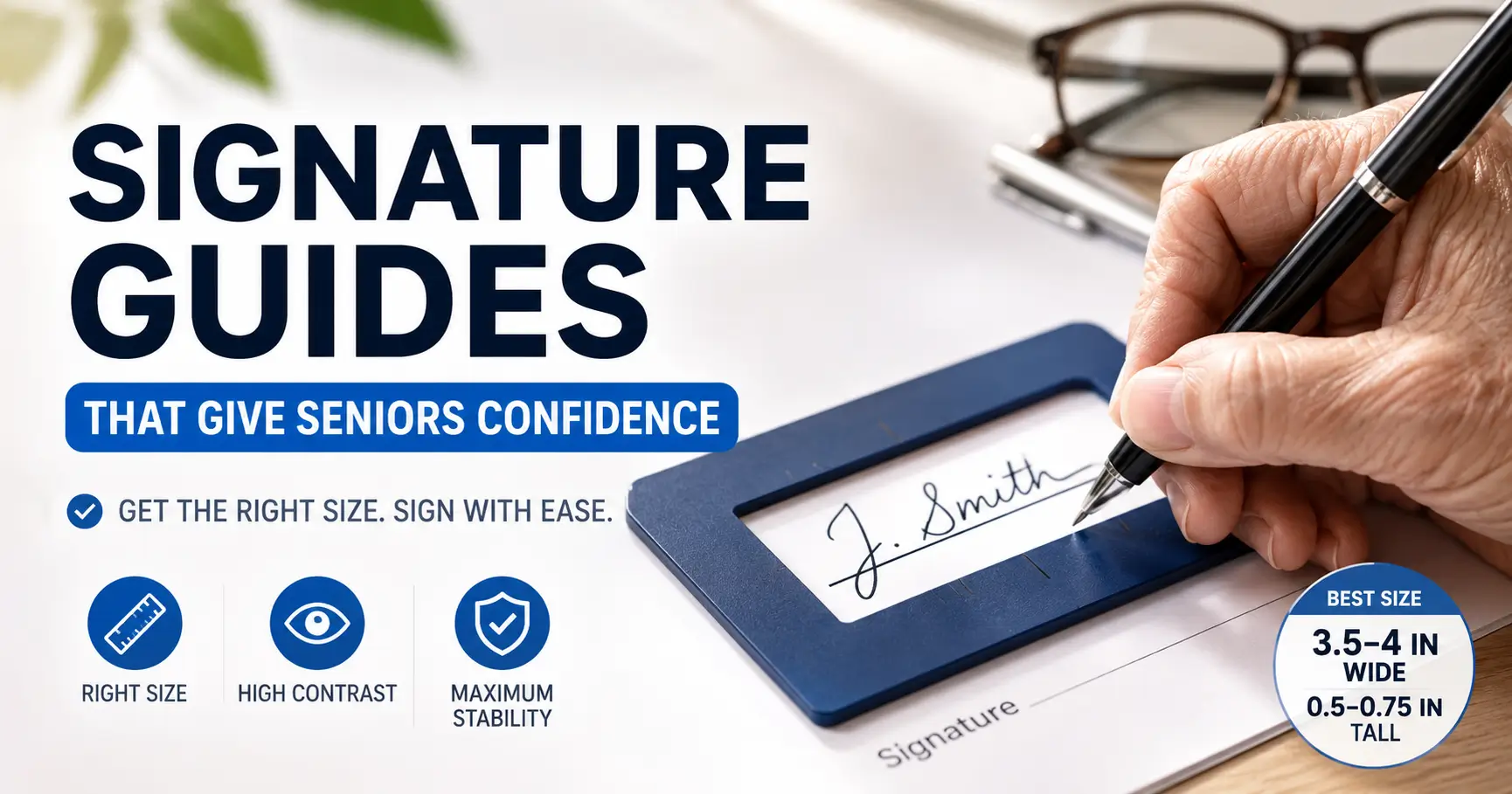
Signature Guide Frames for Seniors: Choosing the Opening Size

signature guide frame for seniors

Summary and next steps Measure the space needed for the person’s usual signature and compare the guide’s inner opening with a sample form. Use a practice sheet rather than an important document Check whether the frame slips or restricts pen movement Read and understand the document before any real signature Related guides How to Sign … Read more

Matte Screen Protector vs Anti-Glare Spray: Which One Actually Fixes Screen Glare?

Anti-glare screen protector

Summary and next steps Change light position and screen angle before applying a product. Follow the screen maker’s care instructions. Identify the reflected light source Try a reversible adjustment first Avoid spraying or coating a display without explicit manufacturer approval Related guides TV Glare Reduction Without Moving the TV: Lamp Placement + Bias Lighting That … Read more

Handheld Magnifier vs Stand Magnifier for Tremor: Which One Actually Helps Shaky Hands?

Summary and next steps Compare magnifiers on one seated reading task, paying attention to wobble, reading distance and fatigue. Use the same familiar text for each comparison Check whether the base and page stay stable Ask a low-vision specialist when neither tool gives comfortable reading Related guides Best Magnifier Stand for Tremor Low Vision: What … Read more

Talking Clock vs Large Display Clock for Low Vision: Which One Actually Helps?

low vision clock

Summary and next steps Compare a talking clock and a display clock from the actual bed or chair, considering both hearing and vision. Check time readability or speech clarity Confirm day, date and alarm controls if needed Keep medicine timing tied to verified directions rather than the clock alone Related guides Low Vision Calendar System … Read more

Bump Dots vs Tactile Tape for Low Vision Labeling: The Safer Home Setup Guide

bump dots vs tactile tape

Summary and next steps Start tactile labeling on one low-risk object with a simple rule the user chooses. A marker does not verify a medicine or make an appliance safe. Agree on one distinct cue Keep vents, warnings and moving parts unobstructed Check adhesion and remove confusing or loose markers Related guides Raised dot placement … Read more

Anisometropia After Cataract Surgery: Reading Imbalance Coping Without Fighting Your Eyes

anisometropia after cataract surgery

Summary and next steps Report uncomfortable reading imbalance after cataract surgery to the surgical team. Avoid changing correction or patching an eye on your own. Note when the imbalance began and which tasks trigger it Follow the surgeon’s recovery and medication instructions Seek prompt care for new pain or worsening vision Related guides Cataract Surgery … Read more