

Senior home safety guide
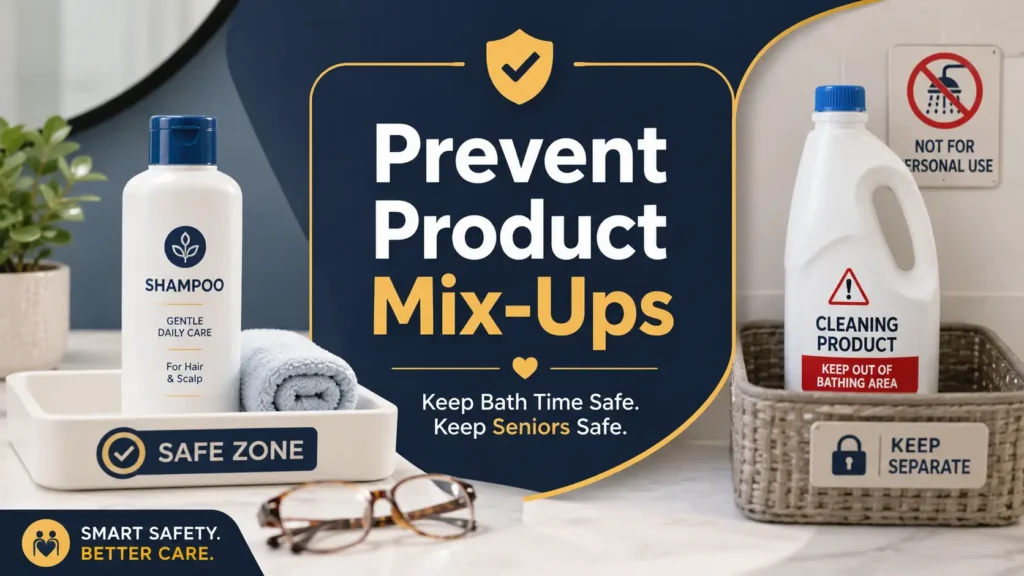
How to Prevent Seniors from Confusing Shampoo
and Cleaning Products
A shampoo bottle and a bathroom cleaner should not be able to pass for cousins. Yet in many homes, they sit shoulder to shoulder under the sink or in the shower: bright labels, pump tops, pleasant smells, and enough visual noise to turn one rushed bath into a real safety scare.
For older adults, the problem is rarely simple “forgetfulness.” Low vision, cataracts, glare, arthritis, fatigue, dementia, medication changes, and crowded bathroom storage can all make the wrong bottle feel like the right one for just long enough to matter.
This guide gives caregivers a practical, shame-free system: fewer choices, clearer labels, safer storage, and a bathroom setup that still respects dignity. The goal is not to turn the home into a warning sign museum. The goal is to make the safe choice obvious, even on a tired Tuesday evening.
Reduce look-alikes
Find bottles that can be mistaken for each other before they create trouble.
Build a safe shelf
Keep daily body-care items simple, visible, and separate from chemicals.
Know when to call
Use Poison Help or emergency care when exposure is possible or symptoms appear.
A safer bathroom begins with one quiet question: could someone tired, wet, and without glasses still choose safely? 🧴
Snapshot
This article is for adult children, family caregivers, home-health aides, and aging-in-place households who want to prevent seniors from mixing up shampoo, body wash, soap, and cleaning chemicals. You will learn how to redesign bathroom storage, choose safer labels, compare low-cost safety tools, and know what to do after a possible exposure.
Before You Act: Treat Product Confusion Like a Safety Signal
This guide helps you reduce the chance that an older adult will mistake shampoo, soap, body wash, lotion, disinfectant, toilet cleaner, bleach, laundry packets, or other cleaning products for something safe to use on the body. It is not medical advice, a dementia diagnosis tool, or emergency treatment guidance.
If a senior may have swallowed, inhaled, touched, splashed, or used a cleaning chemical on the skin or hair, get expert help promptly. In the United States, Poison Help can be reached at 1-800-222-1222. Call emergency services for severe symptoms such as trouble breathing, loss of consciousness, seizures, chest pain, severe burns, blue lips, or inability to wake the person.
Before you act
Do not wait to “see what happens” after possible chemical exposure. Identify the product, keep the container nearby, and contact Poison Help or emergency services based on symptoms. For prevention, focus on storage design rather than memory tests.
For UK readers, call emergency services when symptoms are serious or urgent, and contact NHS 111 or a local medical service for guidance when poisoning is suspected but symptoms are not immediately life-threatening. Local instructions may differ, so use the emergency number appropriate for where the person lives.
What this guide can and cannot do
This article can help you create a safer home setup, choose better labels, compare basic storage tools, and decide when professional support may be wise. It cannot tell you whether a specific exposure is harmless, whether a person has dementia, or whether independent bathing is still safe.
When in doubt, ask. Poison centers, clinicians, occupational therapists, dementia-care programs, and home-health providers exist for exactly these gray-zone moments, when a family is trying to turn fear into a plan.
The Real Risk Is Not “Forgetfulness”
The phrase “confusing shampoo and cleaning products” sounds like a memory problem. Sometimes it is. But in real homes, it is often a design problem wearing memory’s coat.
Bathrooms are full of small bottles that ask the eyes, hands, and brain to cooperate quickly. Add steam, glare, wet fingers, fogged glasses, poor lighting, arthritis, or a rushed caregiver handoff, and the wrong bottle can become the most reachable bottle.
Look-alike bottles create fast, quiet mistakes
Shampoo, conditioner, body wash, hand soap, surface spray, disinfectant, bathroom cleaner, and detergent may all use the same visual language: bright labels, plastic curves, pump tops, fresh scents, and words printed too small to matter from arm’s length.
That matters because the bathroom is not a desk. Nobody stands in the shower calmly comparing ingredient panels under perfect lighting. A senior may reach, pump, squeeze, or spray before the thinking brain has a chance to inspect the details.
Dementia changes the room, not just the memory
When Alzheimer’s disease or another form of cognitive decline is part of the picture, the bathroom itself can become harder to interpret. A familiar scent may feel like a cue. A bottle near the sink may seem safe because it is in a personal-care area. A decorative container may erase the difference between lotion, soap, cleaner, and fragrance.
That is why dementia safety advice often includes locking up or removing potentially dangerous household items, including personal-care products that might be mistaken for food or used incorrectly. The safer question is not, “Should they know better?” It is, “Can the room make the correct action easier?”
Here’s what no one tells you: fewer choices beat louder labels
A giant warning label on a dangerous bottle is useful. But a dangerous bottle sitting beside shampoo is still an invitation to compare under pressure.
The safest bathroom is usually not the one with the most labels. It is the one with the fewest choices at the exact moment of use. One safe shelf. One daily shampoo. One body wash. No cleaners in the bathing zone. Less bottle theater, more quiet certainty.
Key takeaway
Do not treat a product mix-up as a personality flaw. Treat it as evidence that the bathroom is asking too much from vision, memory, touch, and attention.
Build a Safe Shelf Before You Buy Anything
The best way to prevent seniors from confusing shampoo and cleaning products is to create a “body care only” zone. This sounds almost too simple, which is why many families skip it and go straight to fancy labels, smart gadgets, or color systems.
Start with geography. Cleaning products should not live where bathing products are expected to live. The body-care shelf should contain only items meant for the senior’s body, mouth, hair, or skin, and only the items currently used.
One shelf, one category, one job
Choose one shelf, basket, caddy, or tray for daily personal care. Keep it visually calm. If the senior uses shampoo, conditioner, body wash, soap, lotion, toothpaste, and deodorant, those are the only items that belong there.
Do not store guest toiletries, travel samples, duplicate bottles, expired products, half-used hotel minis, hair dye, stain remover, or “just in case” cleaners in the same zone. A bathroom shelf is not a tiny plastic archive of every trip the family has ever taken.
Move cleaners out of the bathroom if possible
Under-sink storage is convenient for the person cleaning the bathroom. It can be risky for the person using the bathroom. It puts toilet cleaner, disinfectant, drain cleaner, glass cleaner, and sprays exactly where an older adult expects to find personal-care products.
When possible, move cleaners to a locked cabinet in a laundry room, utility closet, garage cabinet, caregiver-only bin, or high shelf that is not part of the senior’s daily routine. If cleaners must remain in the bathroom, secure them behind a lock and keep them out of sight.
Keep hazardous products locked, hidden, and original
Do not pour cleaning chemicals into decorative bottles, shampoo-style pumps, drink bottles, or unmarked spray containers. Original packaging usually carries hazard wording, directions, first-aid information, and product identity. Once a chemical loses that packaging, everyone in the home loses clues.
A locked cabinet may feel awkward at first, especially when the senior has always managed the home independently. Reframe it as household design, not restriction. We lock medicine cabinets, secure tools, and store sharp knives carefully because life is easier when dangerous items do not ask for a daily negotiation.
| Storage choice | Risk level | Why it matters | Safer alternative |
|---|---|---|---|
| Cleaner under bathroom sink | High | It sits inside the personal-care zone | Locked utility cabinet or caregiver-only bin |
| Cleaner in decorative pump bottle | High | It can look like shampoo or soap | Original labeled container only |
| Daily shampoo beside body wash only | Lower | The choice set is small and relevant | Keep only current body-care items together |
| Backup toiletries in same shower | Medium | Duplicates add visual clutter | Store backups outside the bathroom |
| Locked cleaner cabinet with label | Lower | Hazardous items are not available by accident | Use caregiver access plus clear household communication |
The Bottle Test: Would It Fool a Sleepy Person?
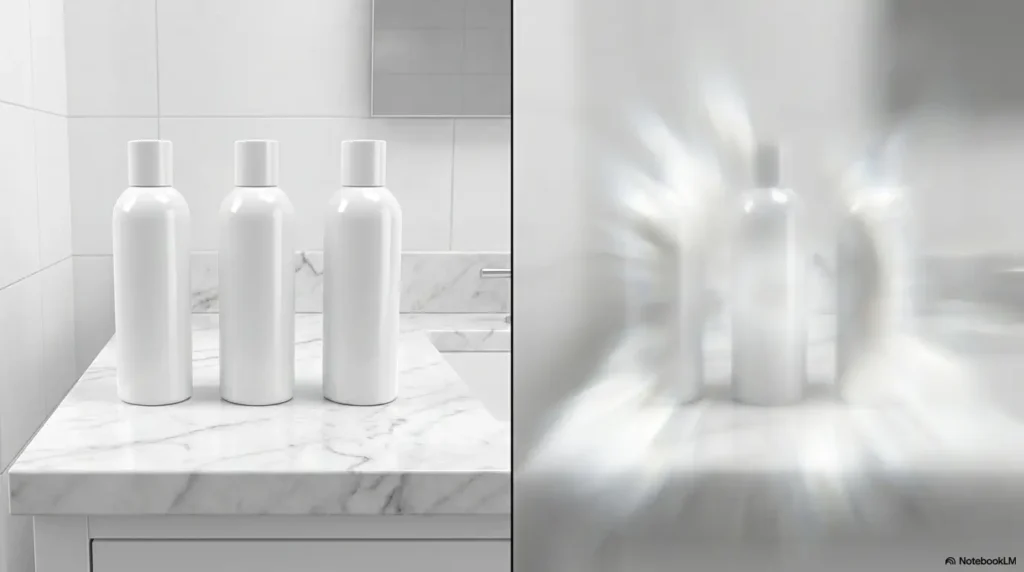
The bottle test is a fast audit for families who want something practical today. Put every bathroom bottle on a towel: shampoo, conditioner, soap, body wash, lotion, cleaner, disinfectant, sprays, samples, hair products, laundry items, and anything hiding under the sink.
Now stop reading labels for a moment. Look at shape, color, cap type, size, scent, and where the bottle usually sits. If two items could be confused by someone sleepy, wet, rushed, or without glasses, the system has failed.
Compare shape before reading the label
Labels are often the last line of defense. Shape and location are earlier cues. A tall white bottle with a flip cap may look like shampoo even if the fine print says “bathroom cleaner.” A pleasant citrus scent may feel friendly even when the product is not safe for skin.
Ask three practical questions:
- Could this bottle be mistaken for shampoo, conditioner, body wash, hand soap, or lotion?
- Could the senior identify it without glasses, under bathroom lighting, from arm’s length?
- Could a caregiver or visiting family member accidentally put it back in the wrong place?
Ban the “pretty refill bottle” trap
Minimalist amber bottles, matching pump sets, and tidy refill containers can look beautiful online. In a senior’s bathroom, they can erase safety information. The same tasteful bottle might hold shampoo, hand soap, lotion, cleaner, or disinfectant.
For households with low vision, memory loss, or rushed care routines, beauty should serve recognition. A bottle can be attractive, but it must not become mysterious. If the label disappears in steam or the contents are known only to the person who filled it, retire it from safety duty.
Use ugly clarity on purpose
Sometimes the safest label is not elegant. It is blunt. Large words like HAIR, BODY, HANDS, CLEANER, and DO NOT USE ON SKIN are not going to win a design award, but they can win the five-second decision.
Pair plain words with contrast, touch cues, and location rules. A safe item can have a raised dot or textured band. A dangerous item should not need a tactile cue because it should not be reachable during bathing.
Key takeaway
If two bottles look alike before you read the words, separate them. Reading should confirm safety, not rescue a confusing setup.
Labels That Work When Reading Does Not
Labels can help, but only when they are designed for the real bathroom: dim corners, glare from glossy tile, steam on mirrors, wet fingers, and older eyes that may be juggling presbyopia, cataracts, macular changes, or fatigue.
The best label system is not clever. It is boring in the noble sense: predictable, high contrast, short, and hard to misread.
Large print beats clever design
Use large, high-contrast labels with plain words. Black text on white or white text on dark backgrounds usually reads better than pale gray on beige, metallic ink, or script lettering. Matte tape can reduce glare compared with glossy label stickers.
Test the label from where it will actually be used. If the senior needs to pick up the bottle, rotate it, and squint, the label is not doing enough.
Picture labels reduce the thinking load
Simple icons can help when reading is slow, vision is reduced, or cognition fluctuates. Use one clear image per label: hair for shampoo, a body outline for body wash, a hand for soap, a toilet for toilet cleaner, a sink for surface cleaner, and a stop sign or danger symbol for items that should not touch skin.
Do not make the icon set too cute. A tiny shampoo bottle illustration that looks like a tiny cleaner bottle does not solve much. Use bold, obvious shapes.
Add touch cues for low vision
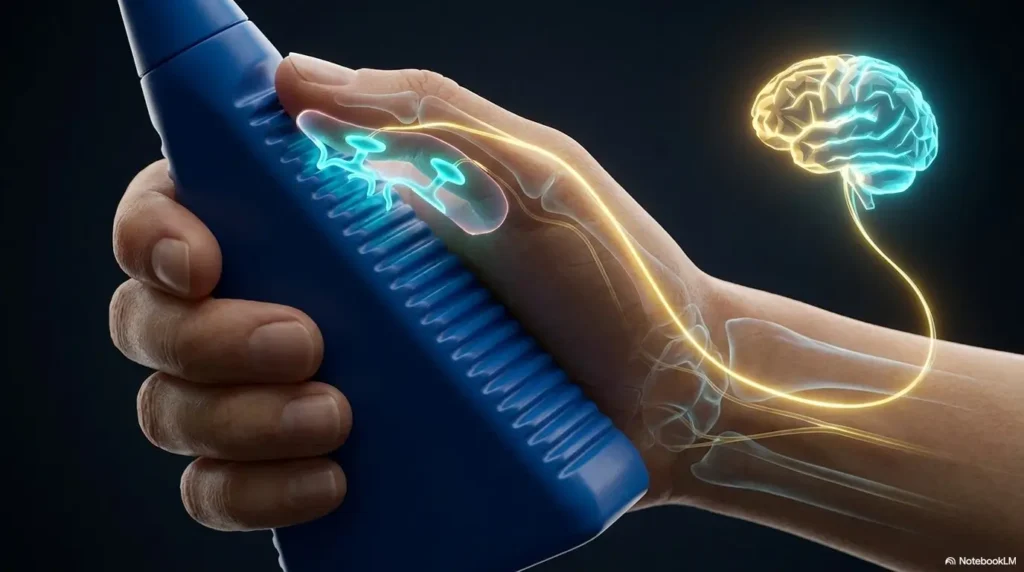
Tactile cues can help seniors identify safe items without relying only on sight. Rubber bands, textured tape, raised dots, or different bottle shapes can mark shampoo, conditioner, and body wash.
Use touch cues carefully. Mark safe body-care items, not dangerous cleaners. A tactile “special marker” on a cleaning product may attract attention. Dangerous products should be locked away, not made more interesting.
| Need | Good | Better | Best |
|---|---|---|---|
| Basic label clarity | Large handwritten label | Printed high-contrast label | Large word plus simple icon |
| Low-vision support | Bold text | Matte label with strong contrast | Contrast plus tactile marker on safe items |
| Dementia-aware setup | Labels on all bottles | Labels plus fewer choices | Safe shelf only, cleaners locked away |
| Shared caregiver routine | Verbal reminder | Posted shelf rule | One written reset checklist near storage area |
Real-world example: the label that did less and worked more
A daughter noticed her father kept reaching for the wrong shower bottle after cataract surgery. She first tried labeling everything: shampoo, conditioner, body wash, face wash, cleaner, tub spray, and tile spray. The bathroom looked organized, but he still hesitated.
The fix was not a better font. It was subtraction. She removed every cleaner, stored backups in a hall closet, kept one shampoo and one body wash in a white shower caddy, and placed a thick raised band only on the shampoo.
The lesson: labels help most when the room has already stopped arguing with them.
The Bathroom Reset That Takes 20 Minutes
You do not need a full remodeling project to make the bathroom safer. Start with a 20-minute reset. Bring a trash bag, a laundry basket, a marker, large labels, and a calm mood. This is not a courtroom. It is a cleanup.
Step 1: Empty every bottle from the bathroom
Remove everything from the shower, tub ledge, sink, medicine cabinet, drawers, under-sink cabinet, windowsill, toilet tank, and bathroom closet. Hidden products are the little goblins of home safety: travel shampoo, old cleaner, mystery spray, expired ointment, sample conditioner, denture tablets, stain remover, and cracked pump bottles.
Put all items on a towel where you can see them. Group them into body care, oral care, medicine, first aid, cleaning products, laundry products, beauty products, and unknowns.
Step 2: Return only daily body-care items
Return only what the senior uses now. Not the shampoo from last year. Not three body washes because they were on sale. Not a backup conditioner because it smells nice. The daily-use zone should feel almost sparse.
If several family members use the same bathroom, create a separate family basket away from the senior’s personal-care zone. Shared bathrooms need stricter boundaries because products migrate like tiny plastic birds.
Step 3: Lock or relocate everything else
Cleaning products, bleach, toilet cleaner, drain cleaner, disinfectants, glass cleaner, laundry pods, stain removers, and sprays should go to a locked or caregiver-only location. If the senior has dementia, repeated confusion, wandering, rummaging, or unsafe product use, “out of sight” matters as much as “out of reach.”
Medication, eye drops, topical creams, and personal-care items can also become confusing. Keep them organized according to the senior’s needs and risk level, and involve a clinician, pharmacist, or occupational therapist when mistakes repeat.
The 5-Part Bathroom Safety Flow
1. Remove
Take every bottle out first.
2. Sort
Separate body care from cleaners.
3. Simplify
Return only daily safe items.
4. Secure
Lock or relocate chemicals.
5. Review
Check after visitors, illness, or cleaning days.
Key takeaway
A 20-minute reset can remove more risk than a cart full of gadgets. First simplify the room. Then add labels, locks, and tools where they actually help.
- Tactile Labels for Shampoo and Conditioner
- Low Vision Nighttime Bathroom Safety
- Tactile Faucet Marking
- Anti-Slip Shower Strips Placement
- Home Safety Checklist for Seniors
When Dementia Is Part of the Story
When a senior has Alzheimer’s disease, vascular dementia, Lewy body dementia, frontotemporal dementia, Parkinson’s-related cognitive changes, or another condition affecting memory and judgment, product safety needs to shift from reminders to environment design.
A reminder asks the person to remember. A safer setup asks the room to do more of the remembering.
Remove temptation, not dignity
Locking up cleaning supplies can feel emotionally loaded. Families may worry it looks infantilizing. But a secured cabinet is not a judgment. It is a guardrail.
Use dignity-preserving language: “These bottles look too similar, so I’m changing the setup,” or “I’m making the bathroom easier for everyone.” This keeps the focus on the environment, not the person’s mistake.
Keep routines visible and products invisible
A simple posted shower routine can help some seniors: wash hair, rinse, wash body, rinse, dry, lotion, dress. Use large print and plain words. But hazardous products should stay invisible and inaccessible.
For dementia care, visible cues should point toward safe actions. They should not compete with tempting bottles, sprays, or chemical scents.
Watch for new patterns after medication, illness, or stress
Sudden or worsening confusion can happen after poor sleep, infection, dehydration, medication changes, hospitalization, grief, pain, alcohol use, or a disrupted routine. A product mix-up may be the first visible clue that something else changed.
If the confusion is new, repeated, or paired with falls, wandering, missed medication, stove mistakes, unsafe driving, or changes in personality, contact a clinician. Bring specific examples. “She used bathroom cleaner as shampoo on Tuesday” is more helpful than “She seems off.”
Show me the nerdy details
Product confusion often happens when multiple cognitive systems must work at once: visual discrimination, memory, language, motor control, hazard recognition, and routine sequencing. A bathroom with too many similar bottles increases what caregivers sometimes call the “thinking load.”
A safer setup reduces that load by using separation, not just labeling. Separation works because it removes the dangerous option from the decision point. Labels help, but they still require the person to notice, read, interpret, and obey the label.
That is why the highest-value change is usually a two-zone system: safe body-care items visible and reachable, hazardous products secured elsewhere.
Tools, Locks, Labels, and Help Worth Comparing
You can make a safer bathroom on a small budget. You can also waste money on gadgets that look reassuring but do not solve the real problem. Before buying anything, decide what job the tool must do: separate, identify, secure, remind, or supervise.
For a senior with mild low vision and no memory issues, large labels and a simpler shelf may be enough. For repeated confusion, dementia, rummaging, or unsafe access, locks and caregiver-only storage become more important.
Low-cost options that often work first
Start with low-cost changes before buying a full bathroom safety system. Many families need fewer bottles, not more equipment.
- Large waterproof labels with plain words
- Matte label tape to reduce glare
- Rubber bands or tactile tape for safe personal-care bottles
- A single shower caddy for daily body-care items
- A plastic bin for caregiver-only cleaning supplies
- Simple cabinet locks for hazardous products
- A printed emergency contact card near the phone or bathroom exit
When paid help may be worth considering
Professional help may be worth considering when product confusion repeats, the senior lives alone, dementia is progressing, bathing has become unsafe, or family members disagree about the level of supervision needed.
Options may include an occupational therapy home-safety assessment, a home-health evaluation, a dementia-care consultation, a primary care visit, a pharmacist medication and product review, or paid caregiver support during bathing and cleaning routines.
Good / Better / Best setup comparison
| Setup tier | Best for | What it includes | What to compare before paying |
|---|---|---|---|
| Good | Early mix-ups, clutter, mild low vision | Bathroom reset, fewer bottles, large labels, safe shelf | Label size, contrast, water resistance, ease of replacement |
| Better | Repeated reaching errors or shared bathroom confusion | Safe shelf plus locked cleaner storage, tactile cues, posted routine | Lock style, caregiver access, whether renters can install it |
| Best | Dementia, unsafe bathing, living alone, repeated exposure risk | Locked hazardous storage, supervised bathing plan, OT or home-safety assessment | Provider credentials, visit cost, written recommendations, follow-up support |
Questions to ask before buying locks, labels, or safety services
- Does this tool remove the dangerous product from reach, or does it only make me feel better?
- Can the senior use the safe items without needing to remember a complicated code or color system?
- Will the label still be readable in steam, glare, and low light?
- Can every caregiver follow the same storage rule?
- Is the lock easy for caregivers but difficult to bypass accidentally?
- Will a renter need permission before installing it?
- Does the professional assessment provide written, room-by-room recommendations?
Key takeaway
The best purchase is the one that supports a simpler system. Labels, locks, bins, and professional help should reduce decisions, not decorate confusion.
When to Seek Help Immediately
Product confusion can range from a near miss to an emergency. Families often hesitate because they feel embarrassed, unsure, or afraid of overreacting. With chemicals, uncertainty is enough reason to ask for guidance.
Call Poison Help after any possible exposure
Call Poison Help or use an official poison control tool if a senior may have swallowed a cleaner, used a cleaner as shampoo, splashed a chemical in the eyes, developed skin burning, inhaled fumes, mixed products, or cannot clearly explain what happened.
Keep the product container nearby. The exact product name, ingredients, amount, timing, symptoms, and the person’s age and weight can help experts guide next steps.
Call emergency services for serious symptoms
Call emergency services right away for severe breathing trouble, fainting, seizures, severe burns, chest pain, blue lips, severe confusion, repeated vomiting, major eye injury, or inability to wake the person.
If you are not sure whether symptoms are serious, err toward getting help. The cost of asking is small compared with the cost of waiting during a real poisoning or chemical burn.
Ask for a home-safety assessment when incidents repeat
If product confusion happens more than once, or if it appears alongside falls, wandering, missed medicines, stove errors, unsafe driving, or trouble with daily routines, ask about a home-safety assessment. A primary care clinician, occupational therapist, Area Agency on Aging, dementia-care program, or home-health provider may help you build a more complete plan.
| Situation | Suggested action | Why |
|---|---|---|
| Cleaner used as shampoo but no symptoms yet | Contact Poison Help and keep the bottle | Experts can assess exposure based on the product |
| Eye splash, burning skin, coughing, or vomiting | Seek urgent guidance immediately | Chemical injuries can worsen quickly |
| Severe breathing trouble, seizure, chest pain, unconsciousness | Call emergency services | These may be life-threatening symptoms |
| Repeated product mix-ups | Ask clinician or OT about home safety | The home setup or care plan may need stronger safeguards |
| Sudden new confusion | Contact a clinician promptly | Illness, medication changes, dehydration, or infection may contribute |
Caregiver Scripts That Avoid Shame
Safety conversations can go sideways fast. An older parent may feel accused. A spouse may feel controlled. A caregiver may sound sharper than intended because fear has been simmering all morning.
The goal is to make the change without turning the bathroom into a battlefield. Use design language, permission where possible, and short explanations.
Replace blame with design language
Instead of saying, “You grabbed the wrong bottle again,” try: “These bottles look too similar, so I’m fixing the setup.”
Instead of saying, “You can’t keep cleaners here anymore,” try: “I’m moving the cleaning products so the shower shelf only has body-care items.”
This matters because shame makes people hide mistakes. Safety improves when a senior can say, “I got confused,” without feeling they have confessed to a crime.
Use permission-based changes when possible
When the risk level allows it, offer a choice: “Do you like this shampoo scent or the other one better?” Then build the safe shelf around the preferred product.
Choice preserves dignity. The boundary preserves safety. You can be kind and firm in the same sentence.
Keep the conversation small
Long lectures rarely make a bathroom safer. Use one change, one reason, one reassurance.
- “I’m putting shampoo and body wash on this shelf only.”
- “Cleaners are moving because the bottles look too similar.”
- “You are not in trouble. I just want the room to be easier.”
- “Let’s keep your favorite shampoo here and everything else somewhere else.”
Key takeaway
The safest script is calm, brief, and specific. Blame asks the person to defend themselves. Design language invites the room to change.
FAQ
What is the safest place to store bathroom cleaners around seniors?
The safest place is usually outside the bathroom in a locked or caregiver-only storage area. If cleaners must stay in the bathroom, keep them locked, out of sight, and in their original containers with labels intact.
Should I use childproof cabinet locks for an older adult?
Yes, when confusion or unsafe access is present, cabinet locks can be appropriate. Pair them with dignity-preserving communication and make sure caregivers can access supplies quickly. For dementia, locks are often less about “childproofing” and more about reducing accidental harm.
Are shampoo and body wash dangerous if swallowed?
Shampoo and body wash may be less dangerous than many cleaning chemicals, but swallowing them can still cause symptoms such as nausea, vomiting, coughing, choking risk, or irritation. Contact Poison Help or a medical professional if ingestion occurred or you are unsure what was swallowed.
What label size works best for seniors with poor vision?
Use the largest label that fits the bottle without wrapping awkwardly around the curve. The label should be readable from arm’s length in the actual bathroom lighting. High contrast, plain words, matte surfaces, icons, and tactile cues often work better than small decorative labels.
Should I remove all cleaning products from the home?
Not always. Many households can keep cleaning products safely by simplifying, securing, and relocating them. If the senior has dementia, repeated product confusion, rummaging, or unsafe access, stronger controls may be needed.
What if my parent keeps moving cleaners back under the sink?
Treat it as a system failure, not stubbornness. Move cleaners farther away, use a lock, reduce the number of products, assign cleaning tasks differently, or create a caregiver-only storage zone. Repeatedly moving cleaners back may also be a sign that the routine needs professional review.
Can confusing shampoo and cleaner be an early sign of dementia?
It can be one possible warning sign when it appears with other changes, such as missed bills, repeated questions, unsafe driving, medication mistakes, personality changes, or difficulty with familiar tasks. Only a qualified clinician can evaluate cognitive concerns.
What should I do after a shampoo-cleaner mix-up?
Identify the product, keep the container, check for symptoms, and contact Poison Help or emergency services when exposure is possible or symptoms are serious. After the immediate issue is handled, redesign the storage system before the next bath.
Next Step: Make the Two-Basket Audit Today
The fastest next step is not shopping. It is sorting. Bring two baskets into the bathroom and give yourself 15 minutes. Set a timer if that helps. The goal is not perfection. The goal is to remove the obvious traps before the next shower, bath, or rushed morning routine.
Basket A: safe body-care products
Put only current daily body-care products in Basket A: shampoo, conditioner, body wash, bar soap, lotion, toothpaste, deodorant, and other items that are safe and relevant to the senior’s routine.
Then choose where those items will live. A shower caddy, shelf, tray, or clearly labeled basket can work. Keep it simple enough that a guest caregiver could understand it without a tour.
Basket B: locked or relocated products
Put bleach, disinfectants, toilet cleaner, drain cleaner, glass cleaner, laundry packets, stain removers, sprays, and mystery bottles in Basket B. These products should be locked, relocated, or removed depending on the senior’s risk level.
If you do not know what a product is, do not keep it in the bathroom. Mystery liquid is not a household category. It is a small future problem with a cap on it.
The final doorway test
Stand in the bathroom doorway and ask: “Could someone tired, wet, without glasses, and in a hurry still choose safely?”
If the answer is no, remove one more product. Move one more cleaner. Make one label bigger. Lock one cabinet. Home safety is often built in small, merciful edits, not grand gestures.
15-minute two-basket checklist
- Remove every bottle from the shower, sink, drawers, and under-sink cabinet.
- Put daily body-care items in Basket A.
- Put cleaners, sprays, laundry products, and unknowns in Basket B.
- Return only Basket A items to the senior’s daily-use zone.
- Lock, relocate, or discard Basket B items safely.
- Save Poison Help, 1-800-222-1222, in caregiver phones.
Last reviewed: 2026-07