
Organize your questions and next steps, then save your worksheet.
Summary and next steps
Medicare Advantage routine eye exam benefits vary by plan. Check networks, copays, refraction fees, and eyewear rules before you book.
Editorial maintenance: October 24, 2026. Summary layout, related links and technical metadata updated. This is not a full clinical review.

MEDICARE ADVANTAGE + VISION
Does Medicare Advantage Cover Routine Eye Exams?
Usually It Can, but Check These Details First
Many Medicare Advantage plans offer routine vision benefits that Original Medicare does not. That can include a routine eye exam, but the benefit is not identical across plans.
The expensive surprise is rarely the words “eye exam” themselves. It is usually a network rule, frequency limit, separate refraction charge, eyewear allowance, or a service that falls outside the routine vision benefit.
This guide shows you how to verify your own benefit before the appointment, distinguish routine vision care from Medicare-covered medical eye care, and know exactly what to ask before anyone dilates, scans, refracts, or sells you glasses.
Best first move: verify the benefit with both your Medicare Advantage plan and the eye-care office before the visit. 👁️
Snapshot
This guide is for Medicare Advantage members, families, and caregivers trying to determine whether a routine eye exam is covered. You will learn how to confirm the benefit, identify possible extra charges, choose the right provider, and tell when an eye problem belongs under medical rather than routine vision coverage.
Table of Contents

Does Medicare Advantage Cover Routine Eye Exams?
Short answer: many Medicare Advantage plans cover routine eye exams as an extra vision benefit, but coverage is not guaranteed and the rules vary by plan. Original Medicare generally does not cover routine eye exams performed to determine a prescription for eyeglasses or contact lenses. Medicare Advantage plans must provide the medically necessary benefits covered by Original Medicare and may add supplemental benefits such as routine vision care.
That distinction explains why two people with “Medicare” can walk into similar eye clinics and leave with very different bills.
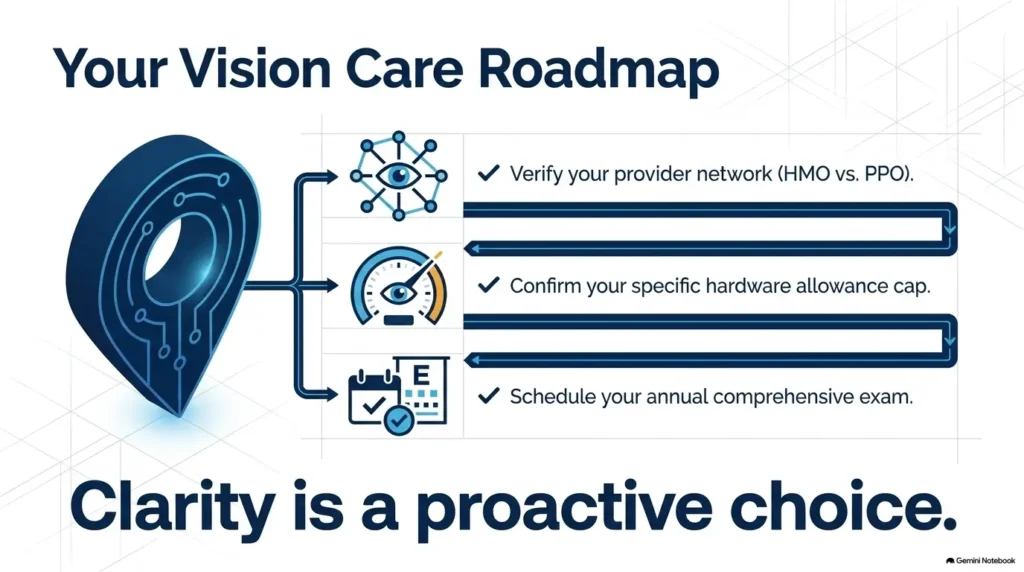
Before making an appointment, confirm four things: whether your particular plan includes routine vision, how often the exam is covered, whether the eye doctor participates in the required network, and which parts of the visit are actually included.
Before You Act
This article explains Medicare coverage categories, not your individual benefits or medical condition. Your Medicare Advantage plan determines its supplemental vision rules and cost sharing. An eye-care professional determines which examination or treatment is medically appropriate. If vision changes suddenly, do not delay needed medical evaluation while trying to use a routine vision benefit.
Key Takeaway
“My plan has vision” is only the beginning. You still need to verify the provider network, exam frequency, copay, refraction rules, and whether eyewear is a separate benefit.
What Routine Vision Coverage Actually Means
A routine eye exam generally evaluates vision and eye health when you are not being examined primarily because of a specific disease, injury, or new medical complaint. It may include checking visual acuity and determining whether your eyeglass prescription has changed.
Medicare.gov specifically states that Original Medicare does not cover routine eye exams for eyeglasses or contact lenses, while some Medicare Advantage plans offer vision benefits that Original Medicare lacks.
A routine vision benefit may have its own rules
Your plan might describe the benefit in terms such as “routine vision exam,” “routine eye exam,” or “supplemental vision services.” Do not assume those phrases mean unlimited eye care.
- A frequency limit may apply.
- You may need an in-network vision provider.
- A copayment may apply even when the exam is covered.
- Eyeglasses or contact lenses may have a separate allowance or benefit structure.
- Certain tests or procedures may be outside the routine benefit.
- A refraction may be handled differently from a medical eye examination.
The exact combination depends on the plan. Medicare Advantage premiums, deductibles, copayments, coinsurance, and other costs vary by plan and can change from year to year.
Your Evidence of Coverage is more useful than an advertisement
If a plan brochure says “vision included,” keep reading. Your Evidence of Coverage (EOC) explains what your plan covers and what you pay. Medicare says plans send this document each year.
Look for terms including vision, routine eye exam, eyewear, eyeglasses, contact lenses, supplemental benefits, network, and cost sharing.

The 10-Minute Coverage Check Before You Book
You do not need to become fluent in insurance hieroglyphics. A short verification call can settle most routine-eye-exam questions before the appointment exists on your calendar.
The Routine Vision Verification Path
Check the EOC, plan portal, or member services.
Verify the specific doctor and office location.
Confirm refraction, dilation, imaging, and eyewear rules.
Note the date, representative, and reference number if given.
Step 1: Call the plan, not just the eye office
Ask member services:
- Do I have a routine eye exam benefit this year?
- How frequently can I use it?
- What is my copay or coinsurance?
- Do I need to use a specific vision network?
- Is a refraction included?
- Are eyeglasses or contact lenses a separate benefit?
Step 2: Verify the actual office location
Medicare Advantage networks matter. Depending on the type of plan, non-emergency out-of-network care may cost more or may not be covered at all. Medicare advises members to use their plan’s provider directory or contact the plan to verify participating providers.
Do not stop at “Dr. Smith accepts Medicare.” Ask whether Dr. Smith at the specific location you are visiting participates in your exact Medicare Advantage plan and its routine vision network.
If you are helping a parent prepare for the appointment, the site’s eye doctor visit checklist for seniors can help organize medications, symptoms, questions, and paperwork before leaving home.
Routine Eye Exams vs. Medical Eye Care: The Distinction That Changes Coverage
This is the part most likely to scramble an otherwise simple question.
A visit can involve your eyes without being a “routine vision exam” for insurance purposes. Original Medicare may cover certain eye services when they meet Medicare’s rules for screening, diagnosis, or treatment of disease or injury, even though it generally does not cover an ordinary examination for a glasses prescription. CMS describes this distinction in its Medicare vision guidance.
| Situation | Likely Coverage Path to Check | What to Ask |
|---|---|---|
| You want an updated glasses prescription and have no new eye complaint | Medicare Advantage supplemental routine vision benefit | Is the routine exam and refraction covered? |
| You have diabetes and need a diabetic retinopathy examination | Medicare medical coverage rules may apply | Is this being billed as a Medicare-covered diabetic eye exam? |
| You qualify for a Medicare glaucoma screening | Part B coverage rules may apply | Do I meet the eligibility requirements and what cost sharing applies? |
| You have a new eye symptom or known eye disease | Medical eye-care benefit may apply | How will the office classify and bill this visit? |
| You only need glasses or contacts | Supplemental vision or self-pay, depending on the plan | What eyewear allowance or network restriction applies? |
Diabetes is a good example
Medicare Part B covers an eye exam for diabetic retinopathy once a year for people with diabetes who meet the coverage requirements. The exam must be performed by an eye doctor legally permitted to provide the service in the state, and normal Part B cost-sharing rules can apply.
Glaucoma screening is another separate category
Part B covers a glaucoma screening once every 12 months for certain people at high risk, including people who meet Medicare’s specified diabetes, family-history, age, and demographic criteria. Deductible and coinsurance rules can apply.
Show me the nerdy details
Insurance coverage follows the reason for the service and the benefit category, not simply the body part being examined. That is why “eye exam” is too vague for a reliable cost estimate.
A routine refraction for determining an eyeglass prescription can be treated differently from an examination performed to diagnose or manage a medical eye condition. One appointment can also contain services that fall into different billing categories.
For Medicare Advantage members, another layer is added: the plan must provide Medicare-covered medical benefits, while supplemental routine vision benefits can have their own network, frequency, cost-sharing, and eyewear rules. Asking the office how each component will be billed is therefore more useful than asking only, “Do you take Medicare?”
What You May Pay for a Medicare Advantage Eye Exam
There is no single nationwide Medicare Advantage price for a routine eye exam. Medicare Advantage costs vary by plan, and benefit designs can change each year.
The useful question is therefore not “How much does Medicare Advantage charge?” but “Which pieces of my visit are covered, and under which benefit?”
| Possible Cost | Why It Can Appear | Verify Before the Visit |
|---|---|---|
| Routine exam copay | Your plan may require cost sharing | Exact in-network member cost |
| Refraction charge | Prescription measurement may be handled separately | Whether refraction is included in the supplemental benefit |
| Out-of-network charge | The provider may not participate in the required network | Network status for the exact location |
| Additional diagnostic testing | A medical concern may require services beyond a routine exam | Why the test is recommended and how it will be billed |
| Frames, lenses, or contacts | Eyewear often follows a different benefit structure | Allowance, frequency, participating suppliers, and upgrade costs |
If the office mentions a separate prescription-measurement charge, see the more focused guide to the Medicare refraction fee. That distinction is one of the most common reasons a supposedly simple eye visit produces a small but puzzling bill.
Spend Only If Needed
Do not pay for a separate vision membership, eyewear package, or out-of-network exam merely because the office says your “Medicare doesn’t cover vision.” First determine whether your Medicare Advantage plan already includes a supplemental benefit and whether another participating provider can provide the covered service.
Before the Appointment: Five Questions That Prevent Surprise Bills
This is the centerpiece. Read these questions from your phone when scheduling the appointment.
- Are you in network for my exact Medicare Advantage plan? Give the full plan name, not merely the insurance company name.
- Is the routine eye examination itself covered at this location?
- Is refraction included, and if not, what would I owe?
- If the doctor recommends imaging, dilation, or another test, will you tell me whether it is routine, medical, or self-pay before doing it?
- If I need glasses or contacts, are those handled under a separate allowance or network?
Then call your plan and confirm the answers. If the two sides disagree, do not referee the argument from the waiting room. Resolve it before the appointment if the service can safely wait.
Your 60-Second Verification Note
Plan:
Provider and location:
Routine exam cost:
Refraction included?:
Eyewear benefit:
Date confirmed:
Representative/reference number:
Paperwork itself can be a barrier when print is small or the waiting room is busy. If that is the practical problem, use these strategies for helping seniors read and complete eye-clinic forms while preserving the patient’s own voice and decisions.
When the Routine Vision Benefit Is Not Enough
A routine benefit can fail you in several very different ways. The fix depends on which problem you actually have.
Still Having Trouble?
If the doctor is out of network: ask the plan for participating eye-care providers before paying cash.
If you already used this year’s routine benefit: ask whether another routine exam would be self-pay and whether your current problem instead requires medically necessary evaluation.
If refraction is not included: ask for the separate charge before agreeing to it.
If your vision has changed unexpectedly: describe the symptom rather than trying to fit the appointment into a routine-exam benefit.
If the benefit seems inadequate every year: compare the entire Medicare Advantage plan at the appropriate enrollment opportunity rather than judging a health plan solely by its vision allowance.
Free first: ask for an in-network alternative
If your preferred optical shop or eye doctor does not participate, the cheapest solution may simply be another in-network provider. Medicare notes that many Medicare Advantage plans use provider networks and that out-of-network non-emergency care may cost more depending on the plan.
When comparing plans becomes reasonable
A vision benefit can matter, especially if you expect routine exams or regularly replace prescription lenses. But it should not eclipse the larger health plan.
| Option | Best Fit | What to Compare | Watch Out For |
|---|---|---|---|
| Use current plan benefit | Your preferred provider participates and the benefit meets your needs | Exam copay, frequency, eyewear terms | Assuming every service is included |
| Use another in-network provider | Your preferred office is the main problem | Provider availability and total expected cost | Choosing solely by retail eyewear promotions |
| Self-pay for a limited routine service | The uncovered service is inexpensive and changing plans makes little sense | Cash price and what is included | Paying before checking existing benefits |
| Compare Medicare Advantage plans | Vision is one of several recurring coverage or network problems | Medical network, prescriptions, total costs, supplemental benefits | Switching plans for a glasses allowance while worsening important medical coverage |
Medicare recommends reviewing your Evidence of Coverage and Annual Notice of Change because plan costs, benefits, and other terms can change for the next year.
What About Glasses, Contacts, and Cataract Surgery?
An eye-exam benefit and an eyewear benefit are not necessarily the same thing. A plan may cover one, both, or neither as supplemental vision benefits, subject to its own terms.
Routine glasses and contact lenses
Original Medicare generally does not cover ordinary eyeglasses or contact lenses. Medicare Advantage plans may provide additional vision benefits, so check your plan before buying.
When comparing an eyewear benefit, ask about the allowance, frequency, participating suppliers, lens upgrades, frame restrictions, contact-lens rules, and what happens if your purchase exceeds the benefit.
After cataract surgery, a different Medicare rule can apply
Part B covers one pair of eyeglasses with standard frames or one set of contact lenses after each covered cataract surgery that implants an intraocular lens. After the Part B deductible, Medicare states that the beneficiary generally pays 20% of the Medicare-approved amount for the corrective lenses, with additional charges possible for upgraded frames. The supplier must meet Medicare’s requirements.
If cataract surgery is the real question behind your search, move next to the site’s guide to Medicare cataract surgery costs in 2026. That is a different coverage decision from an ordinary annual vision visit.
Key Takeaway
Treat the exam, refraction, medical testing, and eyewear as four separate questions. They may happen during one trip to the eye clinic, but they do not necessarily follow one coverage rule.
Do Not Wait for a Routine Exam When Vision Changes Suddenly
Insurance categories are useful for bills. They are not a triage system.
New or sudden vision changes should be described to an appropriate healthcare professional rather than automatically booked as an ordinary glasses check. Examples that deserve prompt medical attention can include sudden loss or marked change in vision, new flashes or a sudden increase in floaters, a curtain-like shadow, severe eye pain, eye injury, or vision symptoms accompanied by neurologic symptoms.
The eye professional decides what evaluation is medically appropriate. Your plan then determines coverage and cost under its rules. Those are two different decisions, and medical urgency comes first.
For a broader practical checklist, review vision-change warning signs in older adults. If your difficulty is more gradual and mainly affects close reading, the guide to presbyopia versus cataracts explains why similar everyday complaints can have different causes.
Frequently Asked Questions
Does every Medicare Advantage plan include a free annual eye exam?
No. Medicare Advantage plans may offer routine vision benefits, but the benefit, frequency, provider rules, and member cost vary by plan. Medicare describes vision as an example of an extra benefit some plans offer rather than a universal supplemental benefit.
Why did the eye doctor charge me if my plan says routine eye exams are covered?
Possible reasons include a copay, separate refraction charge, out-of-network provider, frequency limitation, non-covered upgrade, or additional medical testing. Ask for an itemized explanation and compare it with your plan’s benefit documents before assuming the bill is correct or incorrect.
Does Medicare Advantage cover an eye exam for diabetes?
Medicare-covered medical benefits are different from supplemental routine vision benefits. Part B covers a yearly diabetic retinopathy eye exam for eligible people with diabetes, subject to Medicare requirements and applicable cost sharing. A Medicare Advantage plan must cover Medicare-covered medically necessary services, although plan rules and cost sharing can differ.
Does a Medicare Advantage vision benefit cover glasses too?
It may, but do not infer eyewear coverage from exam coverage. Check separately for frame and lens allowances, contact-lens benefits, participating suppliers, frequency limits, and upgrade charges.
Can I go to any optometrist who accepts Medicare?
Not necessarily. Medicare Advantage plans can have provider networks, and the network used for supplemental vision services matters. Verify the provider with your plan before scheduling non-emergency care.
Should I change Medicare Advantage plans just to get better vision coverage?
Usually, vision should be only one part of the comparison. Review medical providers, prescription coverage, premiums, deductibles, copays, out-of-pocket exposure, prior-authorization rules, and other benefits before deciding whether a plan is a better overall fit.
Optional video: Open the video on YouTube (external site).
Your Next 15 Minutes: Verify the Benefit Before Anyone Touches the Appointment Book
Take out your Medicare Advantage card and find the member-services number. Ask whether you have a routine vision exam benefit, when you are next eligible, what you pay, whether refraction is included, and which local eye-care providers are in the correct network.
Then call the eye office and repeat the verification from their side. Write down both answers.
If your goal is simply a routine prescription check, that may be all you need. If the real problem is new vision loss, eye disease, cataracts, diabetes, glaucoma risk, or another medical concern, stop trying to squeeze the visit into the “routine exam” box and ask how the medically appropriate evaluation should be handled.
The decision rule worth keeping
First identify why you need the eye visit. Then verify which benefit pays for that reason. Finally, confirm which provider and services the benefit actually includes. That three-step check does more to prevent a surprise bill than the reassuring but vague phrase “vision coverage included.”
Last reviewed: 2026-09
PUT THIS GUIDE TO WORK · INTERACTIVE WORKSHEET
Vision benefit comparison worksheet
Use this worksheet alongside the article: Does Medicare Advantage Cover Routine Eye Exams? Usually It Can, but Check These Details First. Use the fields provided to organize your notes and next actions, then save your worksheet.
Your entries stay in this page and are cleared when you reload. No account is needed. Saved files are downloaded only to your device.
How to use your result
Save the worksheet before leaving this page. Recheck any quote, date, or instruction with the relevant provider, pharmacist, manufacturer, or official organization. A completed checklist means you recorded the steps, not that an outcome is guaranteed.
Worksheet added October 20, 2026. Read the article above for context and its stated review scope.