
Eye Drop Expiration: 7 Safety Checks After Opening

Learn how to check eye drop expiration dates, follow product-specific after-opening limits, and keep a clear opening-date record for seniors and caregivers.
Learn how to check eye drop expiration dates, follow product-specific after-opening limits, and keep a clear opening-date record for seniors and caregivers.

Summary and next steps Review accessible labels, current directions and refill checks for medication safety with presbyopia. Confirm uncertain doses with a pharmacist. Related guides How to Create a Large Print Medication Schedule for Aging Parents Without Guesswork What Seniors Should Ask the Pharmacist When Medication Labels Are Too Small Editorial maintenance: October 24, 2026. … Read more

Summary and next steps Medication organization for seniors made safer with clear zones, accessible labels, and refill checks. Related guides Pill Bottle Labeling System for Seniors Who Cannot Read Small Print How to Stop Seniors from Mixing Up Morning and Evening Pills Editorial maintenance: October 24, 2026. Summary layout, related links and technical metadata updated. … Read more
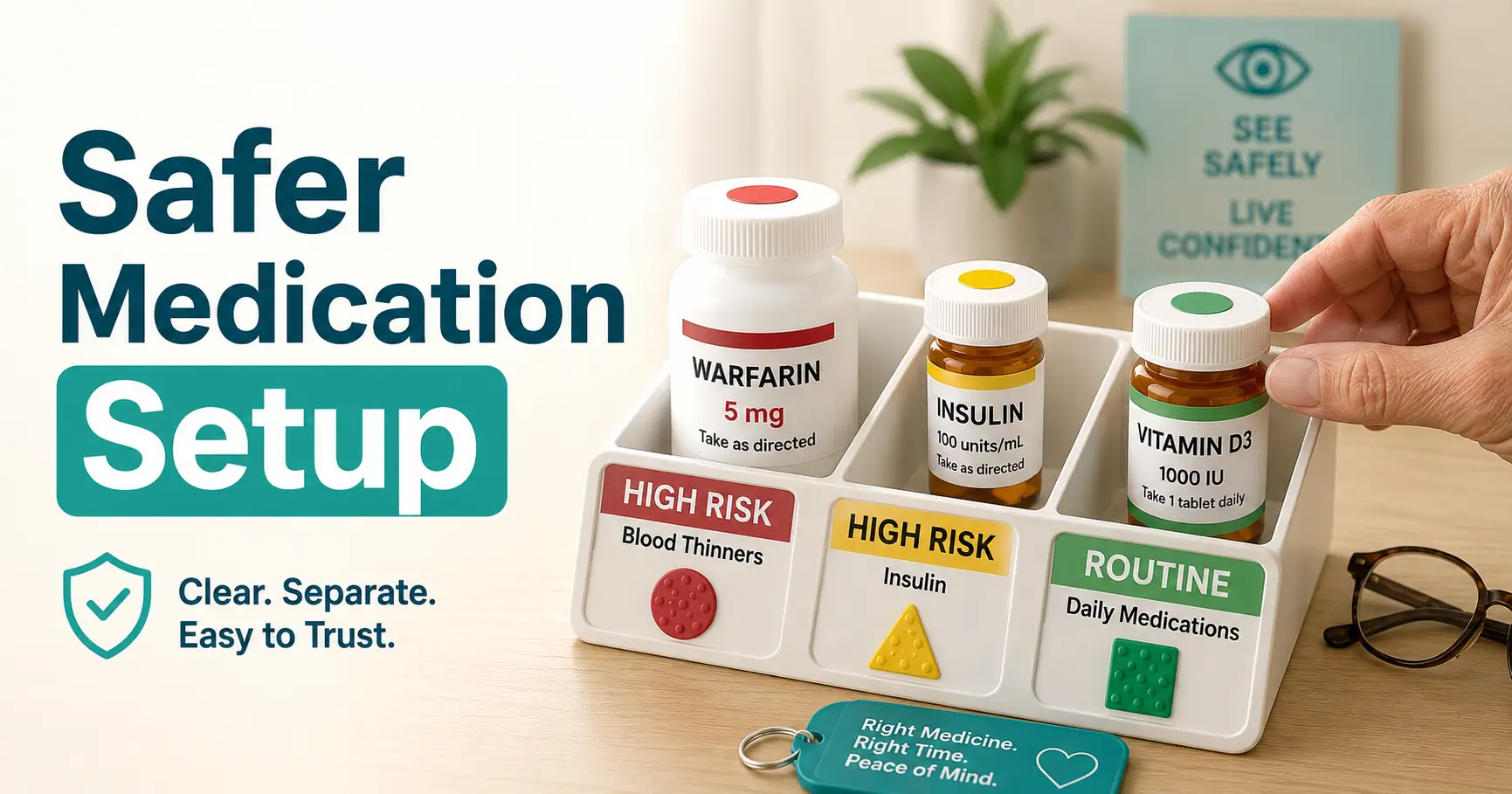
Summary and next steps Ask the pharmacist to identify the medicines most likely to be confused before changing storage. Keep every active medicine with its official label. Ask which containers and storage conditions must stay unchanged. Agree who updates the list after a prescription change. Related guides How to Organize Prescription Bottles for Seniors with … Read more

Summary and next steps Ask the pharmacy for a more accessible label rather than rewriting medication instructions yourself. Name the label detail that is unreadable. Ask about large print, audible or another accessible format. Have the pharmacist verify the current instructions at pickup. Related guides Large-Print Prescription Labels: How to Request Accessible Formats From Your … Read more

Summary and next steps Confirm the prescribed schedule first; AM/PM labels and alarms do not prove that a dose was taken. Ask the pharmacist to reconcile unclear timing instructions. Agree who fills or checks the system. Use one current record and seek advice about any uncertain dose. Related guides How to Organize Prescription Bottles for … Read more

Summary and next steps Use actual working distances and print samples to discuss reading-glasses choices with your eye-care professional. Bring current glasses and examples of difficult print. Describe which distances or tasks stay blurred. Ask what correction to try and when persistent difficulty needs reassessment. Related guides How to Choose Reading Glasses for Seniors with … Read more
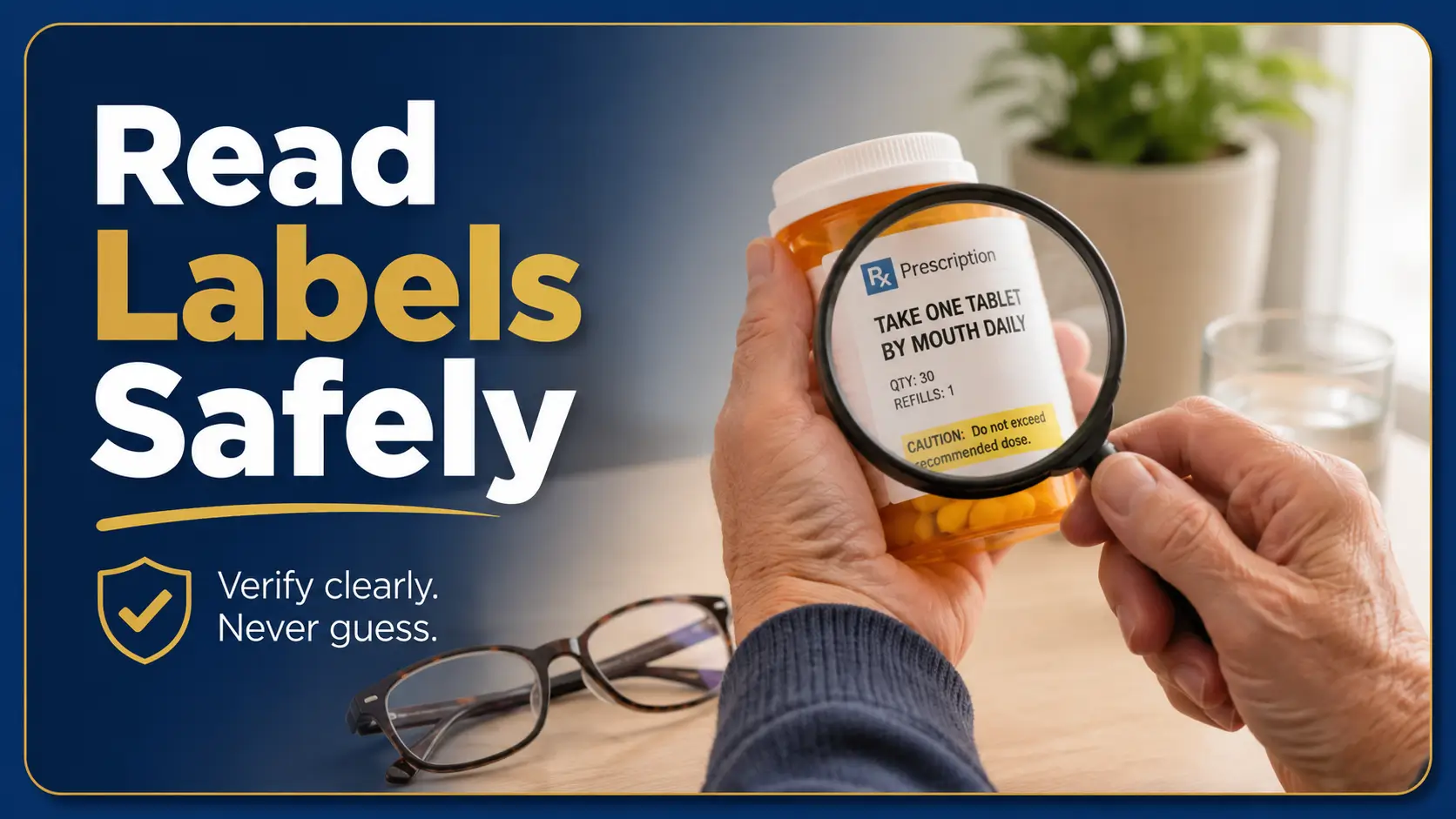
Summary and next steps If any critical medicine detail remains unclear, ask the pharmacist before taking or preparing the dose. Use light and the usual reading correction. Compare the official label with the current pharmacist-verified list. Request an accessible label for any detail you cannot confirm. Related guides Large Print Medication Label Tips for Older … Read more

Summary and next steps Build a patch record from the exact product instructions; do not invent a replacement schedule. Ask the pharmacist what to record for this specific patch. Record confirmed application, removal and next-change details. Ask what to do if timing, adhesion or the number of patches is uncertain. Related guides How to Create … Read more

Summary and next steps Build a readable medication schedule from current, verified instructions. Never assign new dose times just to fit a chart. Gather current bottles and the medication list Ask the pharmacist to resolve conflicting or uncertain directions Check the final chart against the verified regimen before use Related guides Weekly Medication Tracker for … Read more